
Key Takeaways
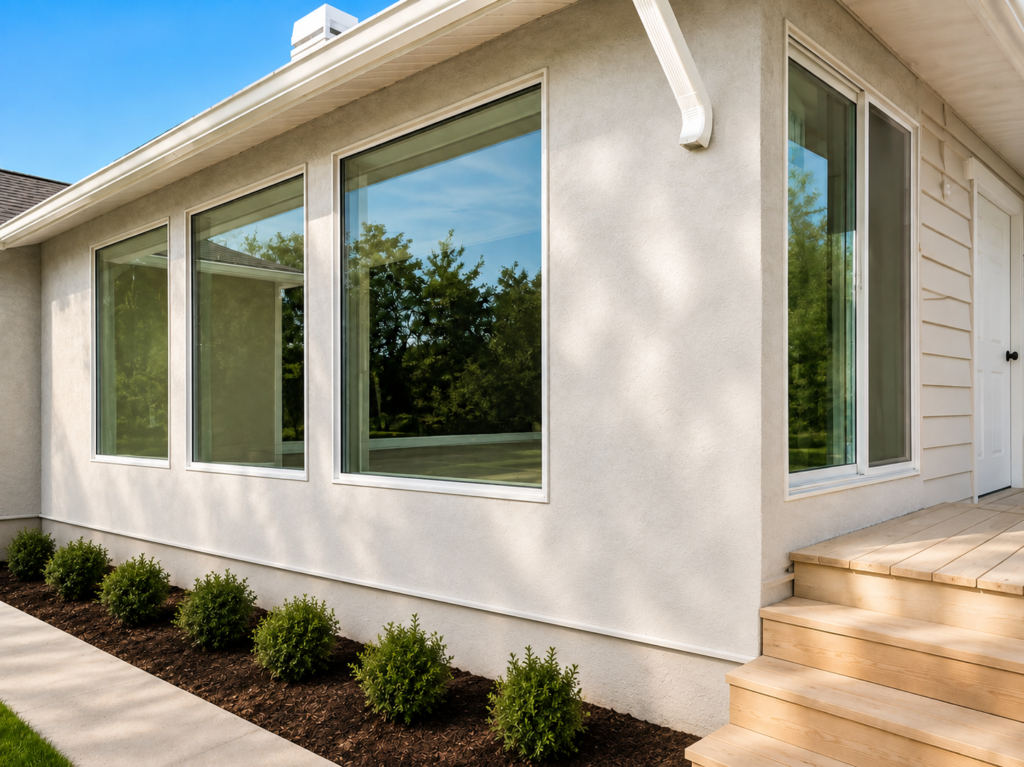
- Impact windows are not required statewide. The trigger is the wind-borne debris region, not the whole state.
- Most of Pinellas County is in that zone, with design wind speeds of 140 to 160 mph, so impact windows or approved shutters are required on permitted work.
- New construction always requires impact-rated glazing or shutters. No exceptions in the zone.
- Window replacement triggers the rule under the 25% rule, explained below.
- Pinellas is not in the High-Velocity Hurricane Zone, so your windows need a Florida Product Approval (FL#), not a Miami-Dade approval.
- The Florida Building Code 9th Edition takes effect December 31, 2026, and tightens the rules near the coast.
Not everywhere. Florida has no single rule that every home needs impact windows. The requirement kicks in when your home sits in a wind-borne debris region or the High-Velocity Hurricane Zone, and most of Pinellas County falls inside that first zone. So for a typical Clearwater home, the honest answer is that impact windows are required in almost every case.
The confusing part is that the rule depends on your address, when your home was built, and how much glass you’re replacing at once. Get it wrong, and you can face a denied permit, a failed inspection, or windows you have to tear back out.
This guide gives you the plain version for Pinellas County. You’ll see exactly who has to have impact windows, when a window replacement triggers the impact window rule, how to check your own address in two minutes, and what’s changing at the end of 2026.
Where are impact windows required in Florida?
Impact protection is required in two zones. If your home sits in either one, every exterior glass opening, meaning windows, glass doors, and skylights, must be impact-rated or covered by approved hurricane shutters.
- The High-Velocity Hurricane Zone (HVHZ). This covers Miami-Dade and Broward counties only. It’s the strictest standard in the country, with design wind speeds of 170 to 175 mph.
- The wind-borne debris region (WBDR). This covers most of Florida’s coast. Under the Florida Building Code (Section 1609.2), your home is in it if the wind speed hits 130 mph or more and you’re within one mile of the coast, or if the wind speed hits 140 mph or more anywhere, coast or not.
Here’s the quick version by zone:
| Zone | Counties | Design wind speed | Impact windows required? | Approval needed |
| HVHZ (High-Velocity Hurricane Zone) | Miami-Dade, Broward | 170 to 175 mph | Yes, always | Miami-Dade NOA |
| Wind-borne debris region | Most coastal counties, including Pinellas | 130 to 160 mph | Yes, on permitted work | Florida Product Approval (FL#) |
| Outside both zones | Inland, lower wind areas | 130 mph or less | Not required (optional) | FL# if installed by choice |
Both zones trace back to Hurricane Andrew in 1992, which showed that ordinary windows fail first in a major storm. Once a window blows out, wind gets inside and pushes the roof off from within, so the code treats glazed openings as the weak point to protect. That history is why impact windows are written into the code the way they are.
The keyword in both is “or.” You don’t have to pick impact windows. You can meet code with approved shutters instead. But in these zones you have to choose one of the two. Our guide comparing impact windows and hurricane shutters breaks down which makes more sense for most homes.
Inland homes in lower wind zones, at or below 130 mph, are not currently required to use impact products. Even there, many owners still choose impact windows for the insurance and energy benefits, but that’s a choice, not a mandate.
Are impact windows required in Pinellas County?
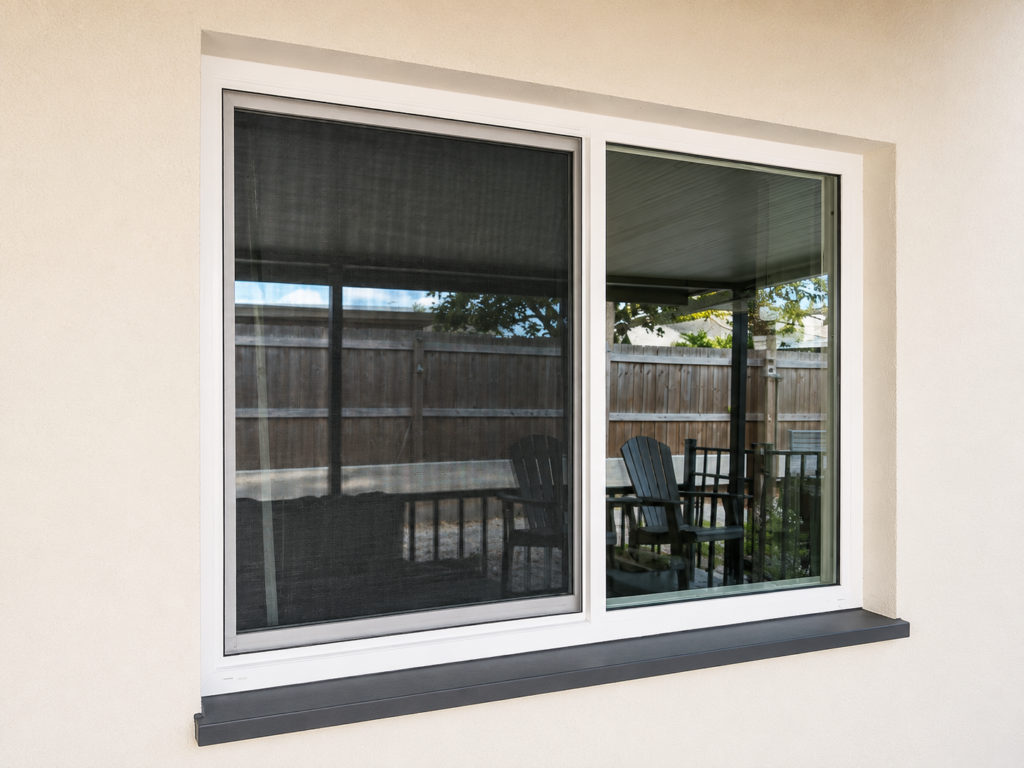
In most of the county, yes. Pinellas is a peninsula surrounded by water on three sides, and design wind speeds run 140 to 160 mph depending on how close you are to open water. That puts nearly every address inside the wind-borne debris region, so impact windows or approved shutters are required on any permitted window work.
One point clears up a common mix-up. Pinellas is not in the High-Velocity Hurricane Zone. Only Miami-Dade and Broward carry that label. So you do not need Miami-Dade-approved products here. What Pinellas homeowners hear about Miami’s 175 mph rules does not apply to Clearwater, Dunedin, or Safety Harbor.
Within Pinellas, the exact requirement still shifts by location. A home three blocks from the Gulf faces higher wind pressure than one five miles inland behind other houses and trees. Building officials use exposure categories to set the design pressure your windows must carry, so two homes in the same city can need different ratings. This is why a real estimate starts with your address, not a generic quote.
There’s a local wrinkle worth knowing. Pinellas has three separate permitting jurisdictions: unincorporated Pinellas County, the City of St. Petersburg, and the City of Clearwater, and the beach towns issue their own permits too. The impact requirement is the same across all of them, but the forms and process differ, so you file with whichever one covers your address. A local impact window installer handles that routing for you.
Do new construction and window replacement follow the same rule?
No, and this is where most homeowners get tripped up. The requirement is strict for new construction and conditional for replacement.
New construction and additions always require impact protection. If you’re building a house or adding a room addition in the wind-borne debris region, every glazed opening has to be impact-rated or shutter-protected. There’s no threshold to cross. It applies from the first window.
Window replacement follows the 25% rule. Here’s the exact rule: if you replace more than 25% of your home’s total glazed opening area within a rolling 12-month period, all the replacement windows must meet current impact standards.
A few details decide whether you cross that line:
- It’s measured by glass area, not window count. One large sliding glass door can be 15 to 20% of your total glass by itself.
- The 12 months is a rolling window, not a calendar year. Building departments track the cumulative area.
- It applies to older homes too, including those built before the 2002 code.
- Cross the line without impact-rated products, and you risk permit denial, fines, and forced removal.
At a glance, here’s how the two project types compare:
| Compliance Comparison | New construction/addition | Window replacement |
| Impact protection required? | Always, from the first opening | Only if you cross the 25% rule |
| What triggers it | Any new glazed opening in the zone | Replacing more than 25% of glazed area in 12 months |
| Measured by | Every opening | Glass area, not window count |
| Applies to older homes? | N/A (new build) | Yes, including pre-2002 homes |
The practical takeaway most contractors give: if you’re replacing a meaningful share of your windows anyway, do them all at once with impact glass. It skips the area math, brings the whole home up to code, and maximizes your insurance credit. Our post on whether impact windows are worth it runs the cost and savings side of that decision.
How do you check if impact windows are required at your address?
You don’t have to guess, and you shouldn’t rely on a salesperson’s word. Two steps confirm it.
- Check your wind zone. The free ATC Hazards by Location tool lets you type in your address and see your design wind speed and whether wind-borne debris protection is required. In most of Pinellas, it will say protection is required.
- Call your building department. Whichever jurisdiction covers your address- unincorporated Pinellas County, Clearwater, or St. Petersburg- can confirm the requirement and the permit path for your project.
A shortcut for older homes: check your window labels. If your home was built or re-windowed after 2002, it may already carry compliant products. Approved windows show either a Florida Product Approval (FL#) sticker or, in South Florida, a Miami-Dade Notice of Acceptance. A licensed contractor verifies this during the estimate, before anything gets ordered.
What makes a window compliant in Pinellas County?
Meeting code is about proof, not looks. A compliant impact window has to carry documentation the building department will check at permit and inspection.
- A Florida Product Approval number (FL#). This is the statewide approval Pinellas uses. It confirms the exact window passed testing. Miami-Dade NOAs are also accepted, but you do not need one here.
- ASTM E1886 and E1996 testing. These are the two tests behind the approval, one for flying-debris impact, one for the repeated wind pressure of a storm.
- A matching design pressure (DP) rating. The window’s rating has to meet the wind load for your specific opening. Corner windows and upper floors near the water carry higher loads.
This is also why installation matters as much as the product. Inspectors check anchor spacing, buck depth, and sealant, not just the sticker. A window with the right FL# still fails if it’s set wrong, which is why permitted, professional installation is part of compliance, not an extra. The permit exists so the building department can verify all of this on site. That protects you: it means someone independent confirmed your impact windows will actually perform when a storm arrives, and it keeps the work on record for resale and insurance.
Are impact windows worth it even where they aren’t required?
Often yes, and this matters for the parts of Pinellas that sit just outside the strictest lines. Even when the code doesn’t force impact windows, they still earn their place, which is why many owners install them by choice.
- Insurance savings. Florida law makes insurers give wind-mitigation discounts for documented impact protection, and those credits repeat every year.
- Energy. Impact glass is laminated and usually Low-E coated, so it cuts heat gain in a year-round cooling climate.
- Security and quiet. The same laminated glass that stops storm debris also resists break-ins and softens outside noise.
- One-time disruption. Doing impact windows now, in one permitted project, avoids the 25% rule math on a future replacement.
So the requirement question and the value question often land in the same place. If you’re curious how the numbers pencil out for a Pinellas home, our guide on whether impact windows pay for themselves covers the cost side without the sales pitch.
What changes with the Florida Building Code in December 2026?
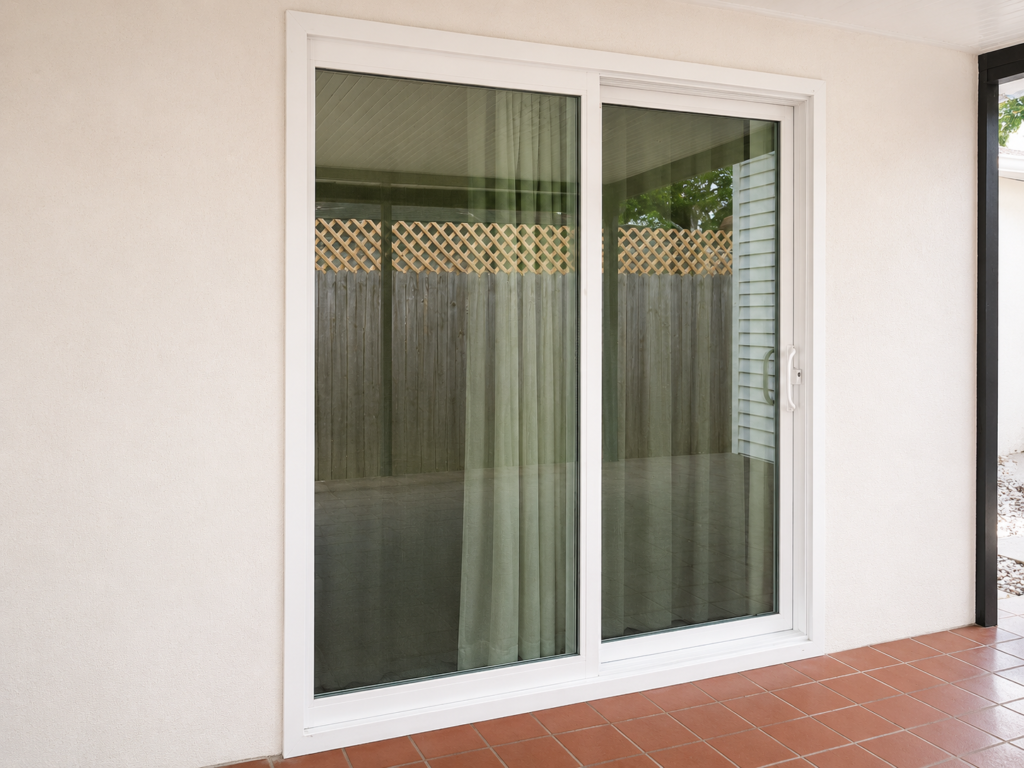
The rules get stricter soon, and the timing gives Pinellas homeowners a reason to move. The Florida Building Code 9th Edition takes effect December 31, 2026, replacing the current 8th Edition from 2023.
The update tightens performance requirements for properties near the coast, including expanded wind-envelope standards within five miles of tidal water, which covers most of Pinellas. It also raises the energy standard windows have to meet. If your permit is accepted before that date, your project follows today’s rules. If it goes in after, the new standards apply. Owners planning a window replacement before year-end have a real reason not to wait.
If a storm has already damaged your home, our guides on hurricane preparation and recovery and foundation damage after hurricanes cover the repair side, and impact windows are usually part of building back stronger.
What impact window work looks like with One Clearwater Construction
We install impact windows and doors across Pinellas County, and we handle the permit, the product approval paperwork, and every inspection, so you never have to prove compliance yourself. As a state-certified, licensed, and insured contractor working here since 2020, we’ve completed more than 100 projects across Clearwater, St. Petersburg, Dunedin, Palm Harbor, Safety Harbor, Largo, Tarpon Springs, and Oldsmar.
We match the window to your home and your budget with premium PGT and CWS impact products, or in-stock options when you want to move faster. We confirm the FL# for every opening, file with the right jurisdiction, and schedule each inspection so the job keeps moving. After one recent window replacement, the homeowner said our “communication was clear and punctual, updates were frequent,” and praised the crew for showing up on time and leaving the place tidy.
Impact windows often go in alongside other work. Plenty of homeowners have us handle them during a kitchen remodel or a bathroom renovation, and we build outdoor living spaces and outdoor kitchens when you’re ready to take on more. For owners out of state, we run remote and second-home projects start to finish.
[CONFIRM: Add one real OCC impact window project in Pinellas. City only, no street address. Include the number of openings, the timeline, and a before-and-after photo. Do not invent any detail.]
Not sure if your home needs impact windows? Find out in one call.
The fastest way to know exactly what your address requires is to ask someone who pulls these permits every week. One Clearwater Construction will check your wind zone, confirm the requirement, and give you a clear written quote with the paperwork handled from day one. Get your free estimate today.
Frequently Asked Questions
Are impact windows required in all of Florida?
No. Florida has no statewide rule requiring impact windows on every home. The requirement applies inside the High-Velocity Hurricane Zone, which is Miami-Dade and Broward, and inside the wind-borne debris region, which covers most of the coast, including nearly all of Pinellas County. Inland homes in lower wind zones are not currently required to use impact products.
Do I need impact windows in Clearwater or Pinellas County?
In most cases, yes. Nearly all of Pinellas sits in the wind-borne debris region, with design wind speeds of 140 to 160 mph. That means impact-rated windows or approved shutters are required on any permitted window work, whether it’s new construction or a qualifying replacement. Check your exact address with the ATC Hazards by Location tool or your building department to be sure.
What is the 25% rule for window replacement in Florida?
If you replace more than 25% of your home’s total glazed opening area within a rolling 12-month period in the wind-borne debris region, all the replacement windows must meet current impact standards. It’s measured by glass area, not by the number of windows. Building departments track the cumulative area over 12 months, so several smaller projects can add up and trigger it.
Do I need Miami-Dade-approved windows in Pinellas County?
No. Miami-Dade approvals are for the High-Velocity Hurricane Zone, which only covers Miami-Dade and Broward counties. Pinellas is not in that zone. Here, compliant windows carry a Florida Product Approval number (FL#), which is the statewide approval. Miami-Dade-approved products are accepted too, but you are not required to use them.
Can I use hurricane shutters instead of impact windows?
Yes. In the wind-borne debris region, the code requires opening protection, and impact-rated windows and approved shutters both satisfy it. Shutters cost less up front but have to be closed before every storm. Impact windows protect the home automatically and add daily benefits like energy savings and quieter rooms. Either one meets code as long as it’s rated for your wind zone.
What happens if I replace windows without meeting the impact requirement?
It creates problems that surface fast. In the wind-borne debris region, a building department can deny the permit, and an inspector can fail the work. Non-compliant windows may have to be removed and replaced with impact-rated products, and you can face fines. Unpermitted or non-compliant window work also tends to surface at resale and can affect your insurance.