
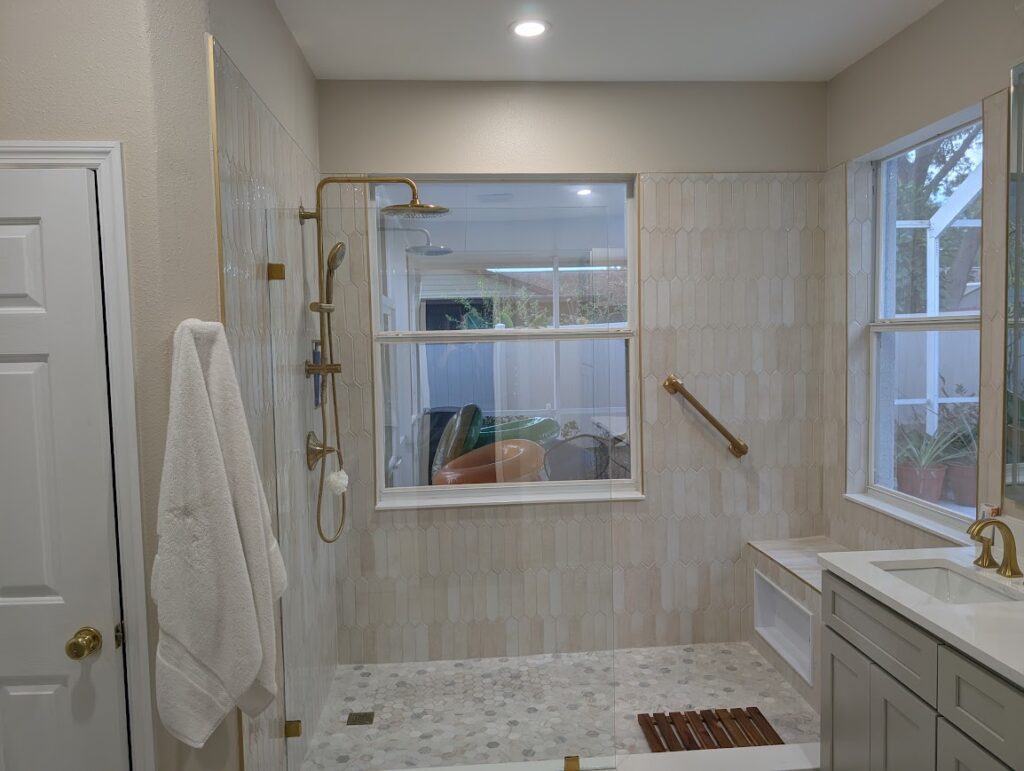
Key Takeaways
- Most bathroom remodels need a permit. Anything that touches plumbing, electrical, a wall, or the layout requires one.
- Cosmetic-only work usually doesn’t. Paint, a new mirror, or a like-for-like faucet swap in the same spot.
- Florida’s new $7,500 permit exemption (HB 803) almost never covers a real bathroom, because it excludes plumbing and electrical work and any home in a flood zone.
- In Pinellas County, you apply for a bathroom remodel permit through the county or your city building department, and the review usually takes 10 to 30 business days.
- Much of Pinellas sits in a flood zone, which can add code rules to a large remodel.
Most bathroom remodels in Florida need a building permit, but not all of them. If your bathroom remodel moves plumbing, adds or changes electrical, opens a wall, or changes the layout, you need a permit. If you only swap finishes in the same spots, like paint, a mirror, or a new faucet, you usually don’t.
Here’s where homeowners get burned. Skipping the permit feels like saving a few weeks and a few hundred dollars. Then it quietly costs thousands at resale, on a denied insurance claim, or when an inspector makes you tear open a finished wall to prove what’s behind it.
This guide covers what needs a permit when you remodel a bathroom in Pinellas County, the new 2026 rule that sounds like a shortcut but rarely helps, the real cost and timeline, and the flood-zone catch that surprises coastal homeowners.
Quick check: does your bathroom remodel need a permit?
Use this as a fast gut check, then confirm your exact bathroom remodel scope with your building department or a licensed contractor before demo starts.
| If your bathroom remodel includes… | Permit? |
| Moving or adding a toilet, shower, tub, sink, or drain line | Yes, required |
| New outlets, a lighting circuit, a fan, or GFCI wiring | Yes, required |
| Removing or moving a wall, or changing the layout | Yes, required |
| A tub-to-shower conversion that changes the plumbing | Yes, required |
| Only paint, a mirror, hardware, or a same-spot faucet swap | Usually not |
Notice the pattern. If you change how the bathroom works, you need a permit. If you only change how it looks, you usually don’t.
What bathroom work needs a permit in Florida?
The line is simpler than it looks. Anything that touches a licensed trade (plumbing, electrical, or mechanical) or anything structural needs a permit. Here’s how that plays out to remodel a bathroom.
You need a permit for:
- Moving or adding plumbing: a toilet, shower, tub, sink, or bidet, or any new drain or supply line. Even shifting a drain a few inches counts, and in a Florida home that often means cutting into the concrete slab.
- New electrical work: added outlets, a new lighting circuit, exhaust fan wiring, GFCI outlets, or a panel upgrade.
- A tub-to-shower conversion, since it changes the plumbing rough-in and the shower pan.
- Removing or moving a wall, adding a window, or changing the room’s footprint. Even a non-load-bearing wall can need a building permit.
- Big comfort upgrades like a steam shower or heated floors, which add electrical and mechanical work.
You usually don’t need one for:
- Painting, a new mirror, or towel bars and shelves that screw into drywall.
- Swapping a faucet or showerhead without moving the plumbing.
- Replacing a toilet, sink, or vanity in the exact same spot with the same connections.
- New flooring, as long as you don’t change the drain or the waterproofing.
One warning for Florida: because of our humidity, some building departments want a permit for shower or wall tile work, since it affects waterproofing. When you’re unsure, one call to your building department settles it.
These rules come from the 2023 Florida Building Code (8th Edition), the statewide code in force today. A newer 9th Edition takes effect on December 31, 2026, and it tightens outlet and circuit rules in bathrooms. If your permit is accepted before that date, your project follows today’s rules.
If your bathroom remodel is part of a larger job, the same logic covers a kitchen remodel or a room addition, and our kitchen permit guide breaks down that side in detail.
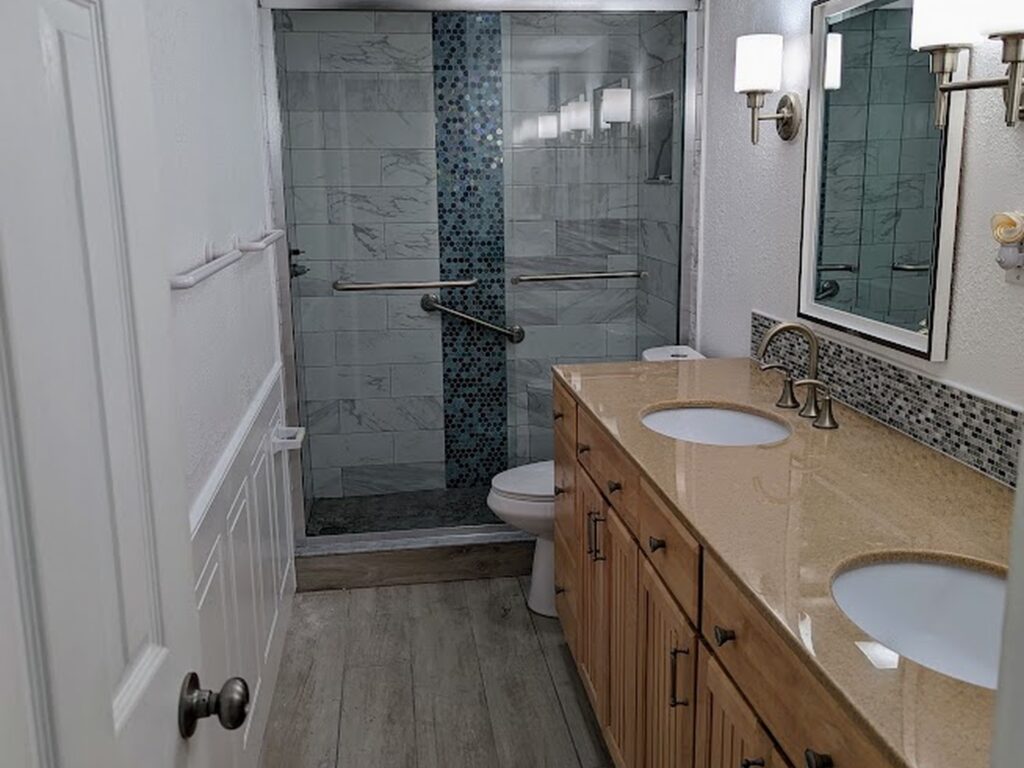
The new 2026 rule: Can the $7,500 exemption skip your bathroom permit?
You may have heard about Florida’s new permit break. It’s real, but it almost never helps a bathroom remodel. Here’s the honest version.
A new state law, HB 803, took effect on July 1, 2026. It lets a single-family homeowner skip the building permit on work valued under $7,500, but only after filing a written request with the building department. That sounds great until you read the fine print, which is where this one lives.
The law carves out five trades that always need a permit, no matter the price:
- Plumbing
- Electrical
- Structural
- Mechanical
- Gas
Look at that list, then look at a bathroom. Almost every real bathroom remodel touches plumbing or electrical, and usually both. So for most bathroom remodels, the exemption is off the table before you even start.
Two more limits close the door for a lot of Pinellas homeowners:
- Flood zones are excluded. If your property sits in a FEMA flood hazard area, the exemption is gone, even for a $300 job. Big stretches of coastal Pinellas are in flood zones.
- You can’t split a project. Breaking a $12,000 bathroom remodel into two $6,000 jobs to duck the limit is the exact move the law names and bans.
Even when the exemption does apply, it removes the paperwork, not the code. Your work still has to meet the Florida Building Code, and you still need a licensed contractor for most jobs. The short version: for a cosmetic refresh outside a flood zone, HB 803 can save you time. For an actual bathroom remodel, plan on a permit.
How bathroom permits work in Pinellas County
Getting a bathroom remodel permit in Pinellas County is usually straightforward. Most run through an online portal and get approved in a few weeks.
Where you apply: If your home is in unincorporated Pinellas County, you or your contractor files through the county’s Accela portal on pinellas.gov. If you live inside a city like Clearwater or St. Petersburg, you apply through that city’s own building department. You upload plans, pay the fee, and later book inspections in the same system.
How long it takes: Plan review usually runs 10 to 30 business days. A simple job, like a water-heater swap, can be same-day. A full bathroom remodel with plumbing and electrical usually takes two to four weeks.
Here’s the process from start to finish:
- Confirm the scope. Decide what work needs a permit before you sign anything.
- Prepare plans. Simple drawings that show the work and how it meets code.
- Submit online. File a complete package through the portal.
- Plan review. The county or city checks it for code (10 to 30 business days).
- Permit issued. Demo and construction begin.
- Inspections. The building department checks each stage, then closes the permit.
One Florida detail trips people up: most building departments want one main permit for the whole bathroom remodel, with your licensed plumber and electrician working under it. Any separate plumbing permit, electrical permit, or mechanical permit rolls up under that one main permit. File a pile of separate trade permits, and an inspector can stop the job.
Who pulls the permit, you or your contractor? Florida lets you pull your own as an “owner-builder,” but then you carry full legal and financial responsibility for the work. Most homeowners let their licensed general contractor handle it. It’s faster, and the contractor’s license stands behind the job. That matters even more if you own the home from out of state, which is why we run remote and second-home renovations from start to finish, permits included. Inspectors only check code, not licenses, so unlicensed work that slips through is still illegal and can void your insurance.
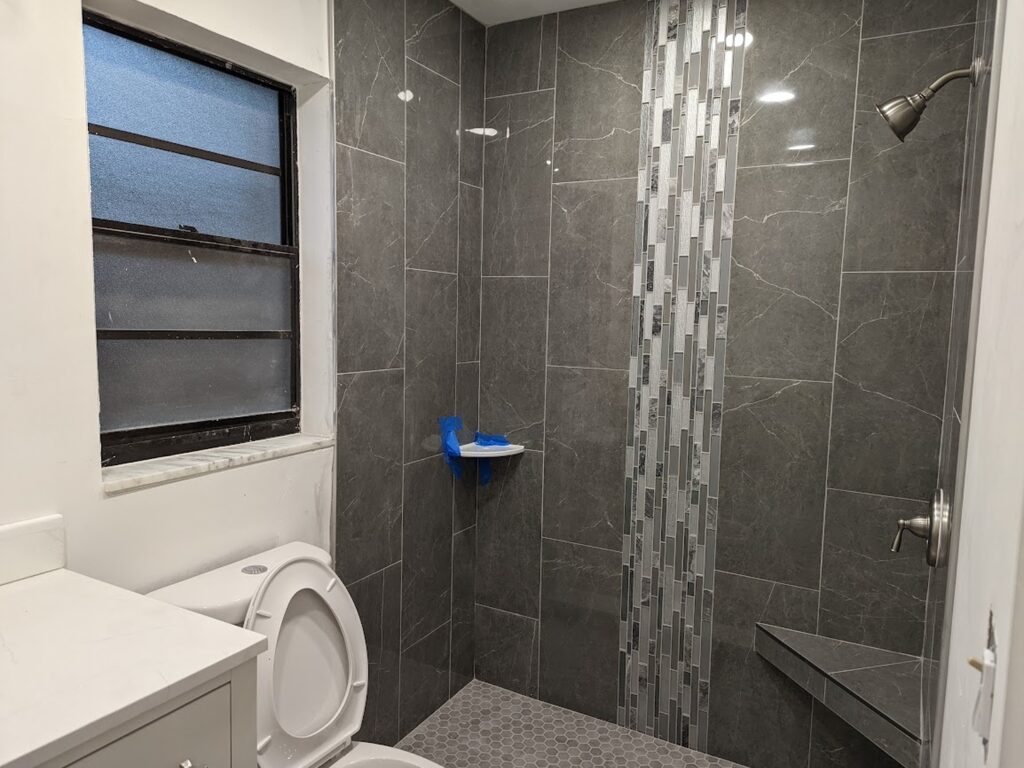
What a bathroom permit costs in Pinellas, and the flood rule to watch
The permit itself is small next to the bathroom remodel. The flood rule is where a project can suddenly get expensive.
The permit fee. Across Florida, a bathroom remodel permit usually runs $100 to $500. Pinellas County bases its fee on your project’s value, about $11 for every $1,000 of construction cost, plus a plan-review fee of roughly 25%, per the county’s building fee schedule on pinellas.gov.
| Project value | Approx. base permit fee* |
| $10,000 | about $110 |
| $20,000 | about $220 |
| $35,000 | about $385 |
At about $11 per $1,000 of value. A separate plan-review fee (roughly 25%, minimum around $125) is added. Confirm current rates on pinellas.gov.
The more trades your bathroom remodel involves, the higher the project’s value and the higher the fee. A cosmetic refresh carries little or no. A full gut bathroom remodel with moved plumbing carries the most.
The flood-zone “50% rule.” Much of Pinellas County sits in a FEMA flood zone, and that triggers a rule most homeowners never hear about. If your bathroom remodel costs 50% or more of your home’s value, counted across a rolling 12 months, the county treats it as a “substantial improvement.” That can push the whole home up to the current flood code, which sometimes means elevating the structure. The City of St. Petersburg uses an even stricter 49% line. Everything counts toward that number: labor, materials, permits, and design fees. A licensed contractor will flag this early, because it’s the single most expensive surprise in a coastal bathroom remodel.
The bathroom code rules that your inspector will check
Even a mid-size bathroom remodel has a few code points that catch DIY jobs. Knowing them up front saves a failed inspection later.
- GFCI outlets. Every outlet in a bathroom must be a GFCI, the kind that cuts power the instant it senses water. Water and electricity are a dangerous mix, so this one is not optional.
- A dedicated circuit. Bathrooms need their own 20-amp circuit for outlets, plus at least one outlet within about three feet of each sink.
- Real ventilation. You need an exhaust fan or an operable window, and the fan has to vent outside, never into the attic. Venting into the attic is a common mistake that grows mold and rots wood over time.
- Waterproofing behind tile. A proper shower needs a continuous waterproof membrane behind all the tile, not just on the floor. Inspectors flood-test the shower pan before the walls close up.
- Clearances. Code sets a minimum amount of space in front of a toilet, sink, and shower so the room stays safe and usable.
None of this is meant to slow you down. It’s what keeps water out of your walls and power away from your hands. A good contractor builds to these rules by default.
Want to avoid the usual traps? Our guide to common bathroom renovation mistakes covers the ones we see most in older Pinellas homes.
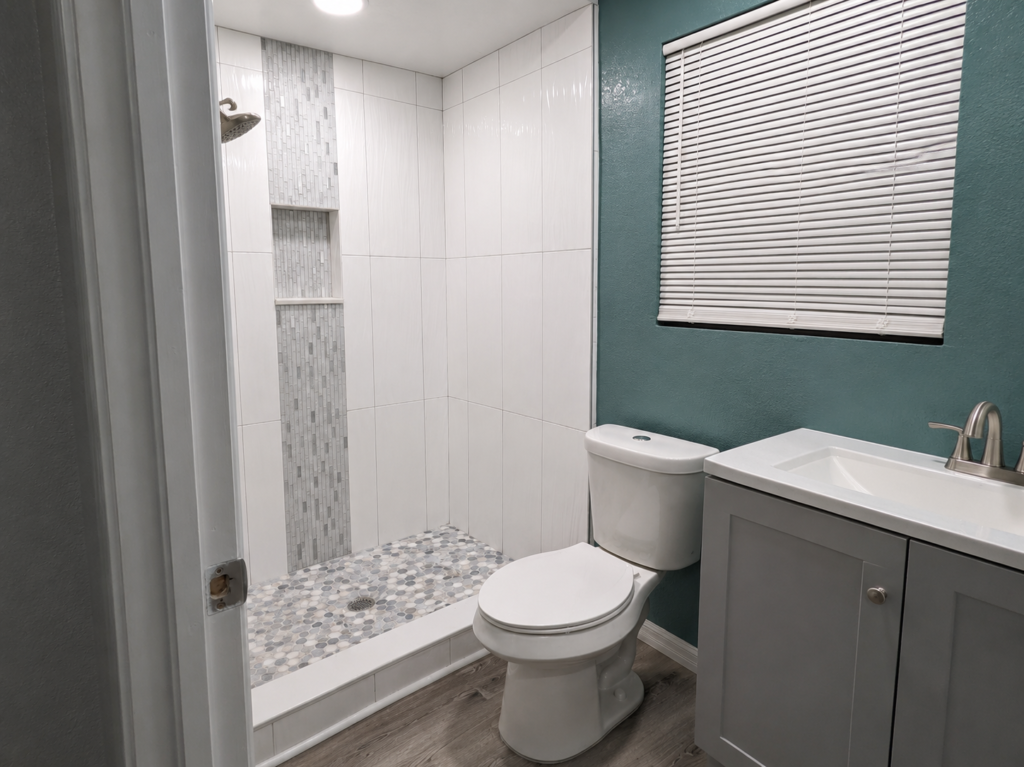
What happens if you skip the permit?
Skipping the permit can cost far more than the permit ever would.
At resale. Buyers, lenders, and title companies check permit history. Unpermitted work can delay or kill a sale, or force you to open finished walls and redo the job to code before closing.
With insurance. If a pipe bursts or a wire fails in a bathroom you remodeled without a permit, your insurer can deny the claim, since the work was never on record.
During the job. An inspector who spots unpermitted work can issue a stop-work order and add fines. In Florida, those fines often run from double the original permit fee up to several thousand dollars, and some areas add a daily penalty until you fix it.
The math almost never favors skipping. A permit that would have cost a few hundred dollars can turn into thousands once any of these hits.
What a bathroom project looks like with One Clearwater Construction
We remodel bathrooms across Pinellas County, and we handle the permits and inspections on every bathroom remodel that needs them, so you never have to figure out the paperwork. As a state-certified, licensed, and insured contractor working here since 2020, we’ve completed more than 100 projects across Clearwater, St. Petersburg, Dunedin, Palm Harbor, Safety Harbor, Largo, Tarpon Springs, and Oldsmar.
Our approach is simple: a clear scope, a fixed written quote, and steady updates so you always know what’s next. We pull the right permits, coordinate the licensed plumber and electrician under one main permit, and schedule each inspection so the bathroom remodel keeps moving. After one recent project, the homeowner said our “communication was clear and punctual, updates were frequent,” and praised the crew for showing up on time and leaving the place tidy.
A bathroom remodel is often one part of a bigger plan. Plenty of Pinellas homeowners have us handle the bathroom renovation itself, and if you’re adding or enlarging a window, we fit code-rated impact windows while the wall is already open. We’re a full-service contractor, so we also build outdoor living spaces and outdoor kitchens when you’re ready to take on the rest of the home.
Not sure if your bathroom needs a permit? Let’s sort it in one call.
Before you order tile or swing a hammer, it helps to know exactly what your project needs. One Clearwater Construction will look at your bathroom remodel plans, tell you straight whether it needs a permit, and give you a clear written quote with the paperwork handled from day one. Get your free estimate today.
Frequently Asked Questions
Do I need a permit to replace a toilet or vanity in Florida?
Usually not, as long as you keep it in the exact same spot and don’t move the plumbing. Swap a toilet for a new toilet, or a vanity for a same-size vanity with the same connections, and you’re generally fine. Move the fixture even a few inches, though, and you cross into plumbing work that needs a permit.
Does a tub-to-shower conversion need a permit?
Yes, in almost every case. Converting a tub to a walk-in shower changes the drain, the plumbing rough-in, and the shower pan, and it usually adds waterproofing. That’s licensed plumbing work, so a permit and inspection are required.
How long does a bathroom permit take in Pinellas County?
Plan review usually takes 10 to 30 business days. A simple permit can be issued the same day, while a full bathroom remodel with plumbing and electrical often lands in the two-to-four-week range. Your contractor can file the moment your scope is set, which keeps things moving.
Can I pull my own bathroom permit in Florida?
Yes. Florida lets you pull your own permit as an owner-builder. But you take on full legal and financial responsibility for the work, and you still have to meet code and pass every inspection. Most homeowners hand this to a licensed general contractor so the license stands behind the job.
Does Florida’s new $7,500 rule mean I can skip my bathroom permit?
Almost never. HB 803 excludes plumbing and electrical work, which nearly every bathroom involves, and it doesn’t apply to homes in a flood zone. So for a real bathroom remodel, plan on a permit. The exemption mostly helps pure cosmetic jobs outside flood areas.
I remodeled my bathroom without a permit. What now?
You can often fix it after the fact by applying for a permit and letting the county inspect the work, sometimes after opening a wall or two. It’s worth handling before you sell, since buyers and inspectors will find unpermitted work, and it can stall a closing. A licensed contractor can help you sort out the record.