
Key Takeaways
- Impact sliding glass doors are the main lanai opening on most Clearwater homes, so they drive both storm safety and insurance
- Pinellas sits in the wind-borne debris region, so lanai doors must be impact-rated or shuttered by code
- The right size depends on the opening, the view, and how many panels you want
- Impact sliders on all openings earn the top opening-protection rating on the state wind mitigation form
- OCC handles the permit, the install, and the insurance paperwork, and gives the price in a free written estimate
Impact sliding glass doors are the single biggest opening on most Clearwater lanais, and in a coastal county that makes them the most important storm decision in the house. Get them right, and you protect the home, cut outside noise, and earn an insurance credit. Get them wrong, and you have a code problem and a leak waiting for the next storm.
This guide covers what these doors are, the sizes and wind ratings that matter in Pinellas County, the permit and insurance side, and what to expect when One Clearwater Construction installs them. It does not quote a price, because the right number depends on the opening, and OCC gives that in a free written estimate rather than a guess online.
What are impact sliding glass doors?
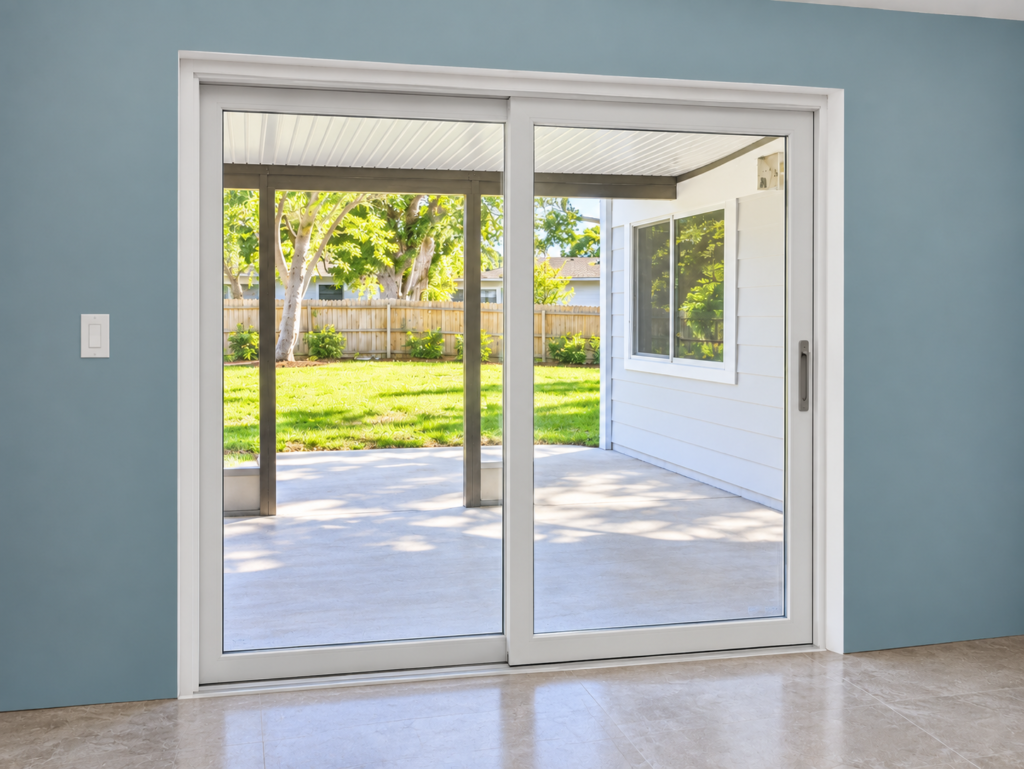
Impact sliding glass doors are patio doors built with laminated glass and a reinforced frame that hold together when hit by storm debris. The glass may crack, but it stays in the frame, so wind and water cannot get in. That is the whole point on a lanai, where the opening is wide and faces the weather.
They are not the same as a standard slider with a shutter bolted over it. The protection is built in, so there is nothing to put up before a storm and nothing to take down after.
A few things set them apart from regular sliders:
- Laminated glass with a tough inner layer that holds the pane together on impact
- A heavier frame anchored to the structure, not just screwed to the trim
- A product approval number tested to Florida standards
- Weather seals that keep wind-driven rain out at the sill
One Clearwater Construction lists impact doors and sliders as a core service, and a recent Google review describes the team installing every window and slider on a Clearwater triplex. So this is work the company does often, not a sideline.
Why Clearwater lanais need impact sliders
The lanai door is usually the widest piece of glass in a Florida home, which makes it the weak point in a storm. One failure there changes the pressure inside the whole house and lets the wind lift the roof. That is why the code treats it as seriously as it does.
Clearwater also sits in a high-exposure zone. Barrier-island areas like Clearwater Beach and Island Estates face direct Gulf wind, and older inland ranch homes often have original sliders that were never built for current code.
Here is what impact sliders do for a Clearwater lanai beyond storm safety:
- Block wind-driven debris without shutters
- Cut outside noise from the street or pool deck
- Reduce UV fade on floors and furniture
- Add daily security, since the glass resists a break-in
- Support an insurance credit for opening protection
The storm season is the reason most people call, but the daily benefits are what they notice first.
code rule every Clearwater lanai falls under
There is a rule behind all of this, and it is not optional. Under the Florida Building Code, Pinellas County sits inside the wind-borne debris region, which the Florida Building Commission defines by design wind speed along the coast.
In that region, every glazed opening has to be impact-rated or protected with an approved covering. A lanai slider is a glazed opening, so any permitted replacement it has to meet that standard. There is no version of a code-compliant lanai door in Clearwater that skips impact protection.
What sizes do impact sliding glass doors come in?
Lanai openings vary a lot, so the door is built to the opening rather than the other way around. The number of panels and how they move is what changes the look and the budget.
Here is how the common configurations compare.
| Configuration | How it works | Best for |
| 2-panel (one fixed, one sliding) | One panel slides behind a fixed panel | Smaller lanai openings, standard rooms |
| 3-panel | Center or end panel slides, two fixed | Wider living-room-to-lanai openings |
| 4-panel | Two slide and two fixed | Large lanais and pool-deck walls |
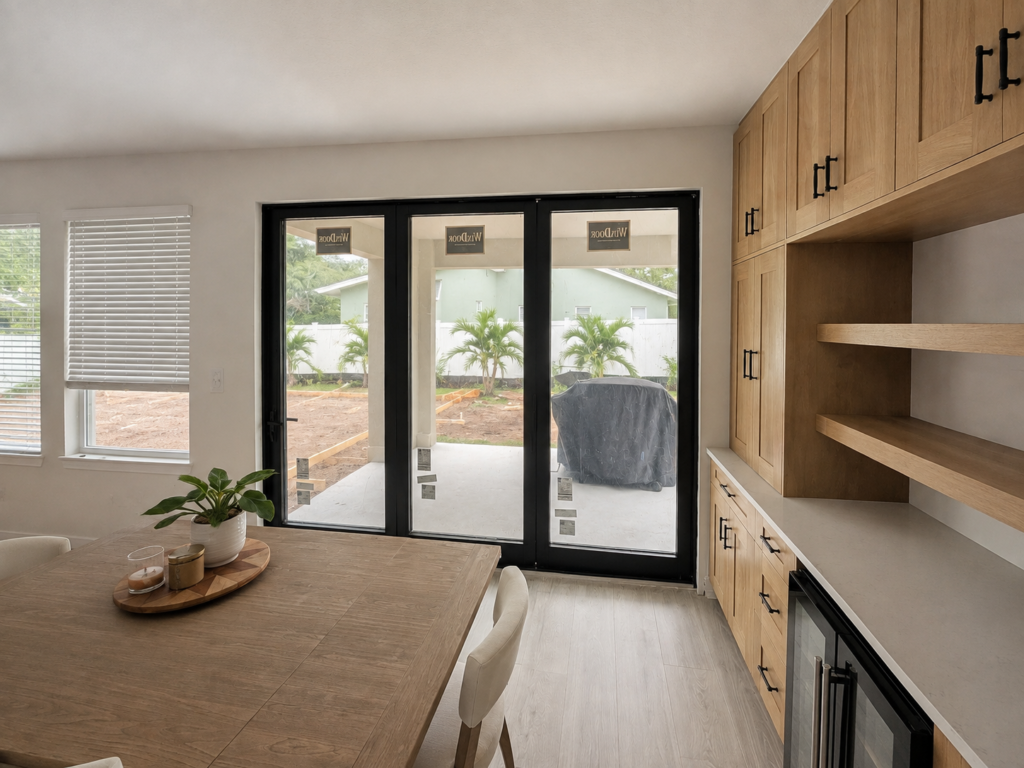
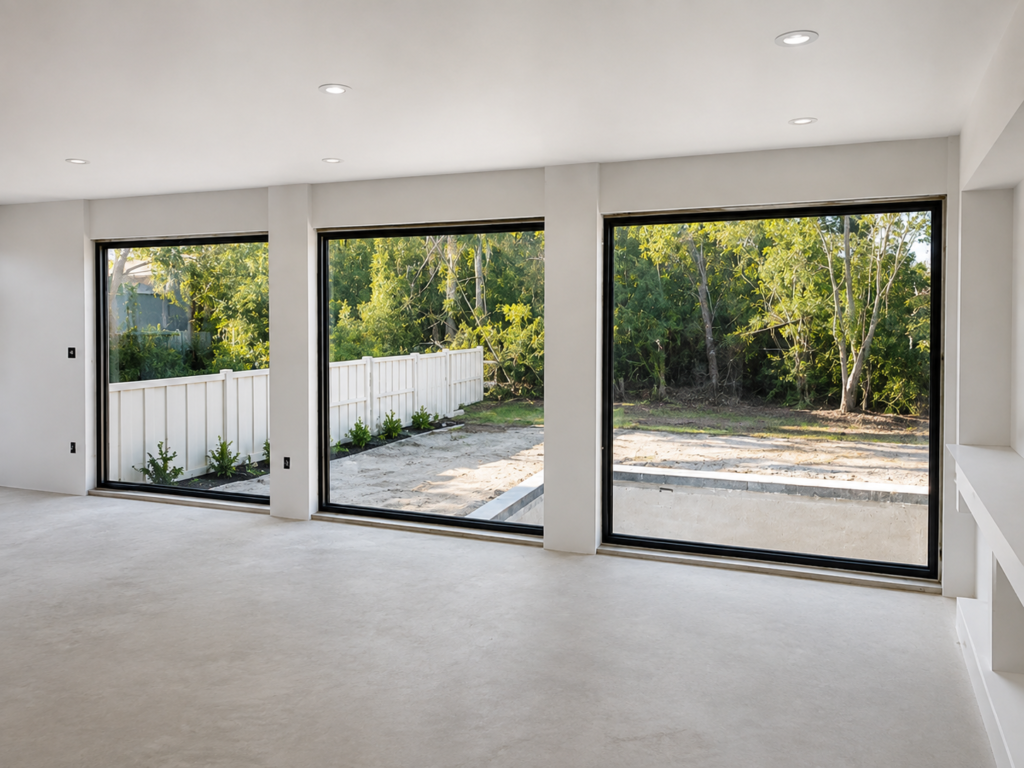
Panel height usually runs from a standard 80 inches up to 8 feet or more for a vaulted lanai. The wider and taller the opening, the heavier the glass, so measurement and anchoring matter most on big walls.
Before you fix on a size, think about three things:
- How much of the view you want to keep when the door is closed
- How many panels you want and how much of the wall they clear
- How the door lines up with the pavers or lanai floor for a flush, safe threshold
A good installer measures the opening and the structure first, then tells you which configurations the wall can actually carry. That is part of the free estimate, not an upsell.
How impact ratings work on sliding glass doors
Ratings are where a cheap door and a code-compliant door look identical in a showroom but perform very differently in a storm. The rating is tied to a tested product approval, not a sales label.
What to look for on an impact slider:
- A Florida product approval or Miami-Dade NOA number you can look up, which proves the whole assembly was tested
- Large missile impact rating, the level residential coastal homes should carry
- A design pressure (DP) rating matched to the wind load at your address
- An ENERGY STAR label, since the EPA ENERGY STAR program rates doors for the hot climate zone and lower bills
The design pressure part matters most near the water, for a few reasons:
- A door rated for an inland lot is not automatically rated for a beachfront wall
- Barrier-island openings face higher design pressures than mainland ones
- The product approval has to match your exact wind zone to pass inspection
OCC installs impact-rated sliders approved for Florida wind zones.
Energy performance is a real bonus here. The U.S. Department of Energy notes that low-e coatings cut the solar heat that comes through glass, which on a west-facing lanai is the difference between a usable room and an oven.
Do you need a permit for lanai doors in Clearwater?
Yes. Replacing a slider changes a structural opening and the anchoring, so it needs a building permit and an inspection in every Pinellas city.
What the permit process covers:
- The product approval number for the exact door going in
- The design pressure for your wind zone
- Proper anchoring to the structure, checked at inspection
- A final sign-off that the install matches the approval
City of Clearwater addresses go through the city’s own permits and inspections office, while unincorporated areas use Pinellas County. One Clearwater Construction pulls the permit and meets the inspector, so you never deal with the building department yourself.
The insurance credit most homeowners miss
Here is the part that pays you back. Impact sliders are not just a cost; they are a line on your insurance.
Impact-rated protection on all openings earns the top opening-protection rating on Florida’s wind mitigation inspection form, which is usually the single largest storm-related discount an insurer gives. OCC provides the documentation your wind mitigation inspector needs after the install, which is the step that actually unlocks the credit.
So the real cost of the project is lower than the sticker number once that credit lands. Your insurer sets the discount, so ask what an all-openings impact package would do to your premium before you decide.
What to expect when OCC installs your lanai doors
The install itself is straightforward in the right order. The value is in the measuring, the anchoring, and the paperwork, not just dropping a door in a hole.
Here is the sequence for a typical Clearwater lanai slider:
- Free on-site measure of the opening and a check of the structure
- Written estimate with the door configuration and product approval spelled out
- Permit application with the product approval and design pressure
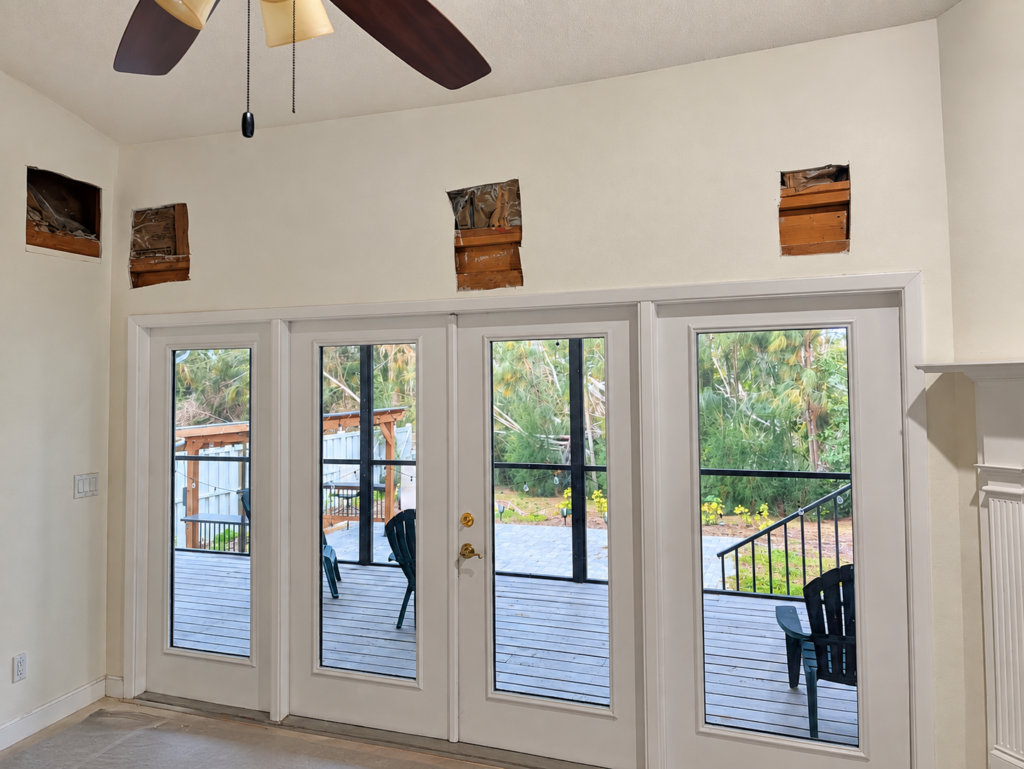
- Removal of the old slider and prep of the opening
- Set, anchor, and seal the new door to the approval
- Inspection and final sign-off
- Wind mitigation documentation handed to you for your insurer
A single lanai door is usually a short job once the permit is in hand. A whole-home slider and window package takes longer, but it earns the full opening-protection credit because every opening is covered.
Through all of it, OCC keeps one promise from its site: you know what is happening, when, and at what cost, with weekly updates and a project manager you can reach. For a wider view of how impact protection fits a bigger project, the impact windows and doors service page covers the full scope, and the room addition planning guide explains why impact glazing is a code item on any new opening.
How much do impact sliding glass doors cost in Clearwater?
The honest answer is that it depends on the opening, and OCC does not publish a flat door price because no two lanai walls are the same. A 2-panel standard slider and a wide 4-panel door on a beachfront wall are different jobs with different glass, framing, and labor.
What drives the number up or down:
- The size of the opening and the number of panels
- The number of panels in the door
- The design pressure your wind zone requires
- Any structural work if the opening is being widened
- How many openings you do at once
Rather than guess, OCC gives a free written estimate before any work begins, and the price only moves if you change the scope. That estimate is also where the insurance credit and any grant are factored in, so you see the real net cost, not a sticker number. You can start that on the contact page or by calling the office.
Ready to plan your lanai doors?
Impact sliding glass doors are the strongest upgrade you can make to a Clearwater lanai, for storm safety, comfort, and insurance all at once. The right door depends on your opening, your wind zone, and how you use the space.
Here is what you get with One Clearwater Construction:
- A free on-site measurement and written estimate
- Impact-rated sliders approved for Florida wind zones
- Permits and inspections handled for you
- Wind mitigation documentation for your insurer
- A licensed and insured contractor serving Pinellas since 2020
Call (727) 314-2191 or request your free estimate online. You can also see how the team runs a project on the About page.
Frequently Asked Questions
Are impact sliding glass doors required in Clearwater?
On a permitted replacement, yes. Pinellas County sits in the wind-borne debris region, so lanai doors must be impact-rated or protected with an approved covering. Impact glass is the option that needs nothing put up before a storm.
What size impact slider fits a lanai?
It depends on the opening. Common setups run from a 2-panel door on a smaller opening to 3- and 4-panel doors on wide pool-deck walls. The door is built to your opening, so a measurement comes first.
Do impact sliding glass doors lower insurance in Clearwater?
They can. Impact-rated protection on all openings earns the top opening-protection rating on Florida’s wind mitigation form, usually the biggest storm-related discount. OCC provides the documentation your inspector needs to claim it.
Do I need a permit to replace a impact sliding glass doors in Pinellas County?
Yes. Replacing a slider changes a structural opening and its anchoring, so it needs a building permit and an inspection. Your contractor should pull the permit and schedule the inspection for you.
How long does it take to install a lanai slider?
A single door is usually a short job once the permit is issued. A whole-home package of doors and windows takes longer but earns the full opening-protection credit because every opening is covered.
What is the difference between an impact slider and a slider with shutters?
An impact slider has the protection built into the glass and frame, so there is nothing to put up or take down. A standard slider needs a shutter installed over it before each storm to meet the same code requirement.