
Key Takeaways
- A slider window moves horizontally on a track. One panel slides; the other is typically fixed.
- Two types exist: single sliders (one moving panel) and double sliders (both panels move).
- In Pinellas County, slider windows in new construction or permitted replacement must meet a 140-160 mph design wind rating and carry a Florida Product Approval (FL#).
- Because only half the slider window opens, sizing for bedroom egress requires careful calculation before ordering.
- Impact-rated slider windows can qualify you for 10-45% wind premium discounts under Florida Statute §627.0629.
- The Florida Building Code 9th Edition takes effect December 31, 2026, and tightens rules for properties within five miles of tidal water, which covers virtually all of Pinellas County
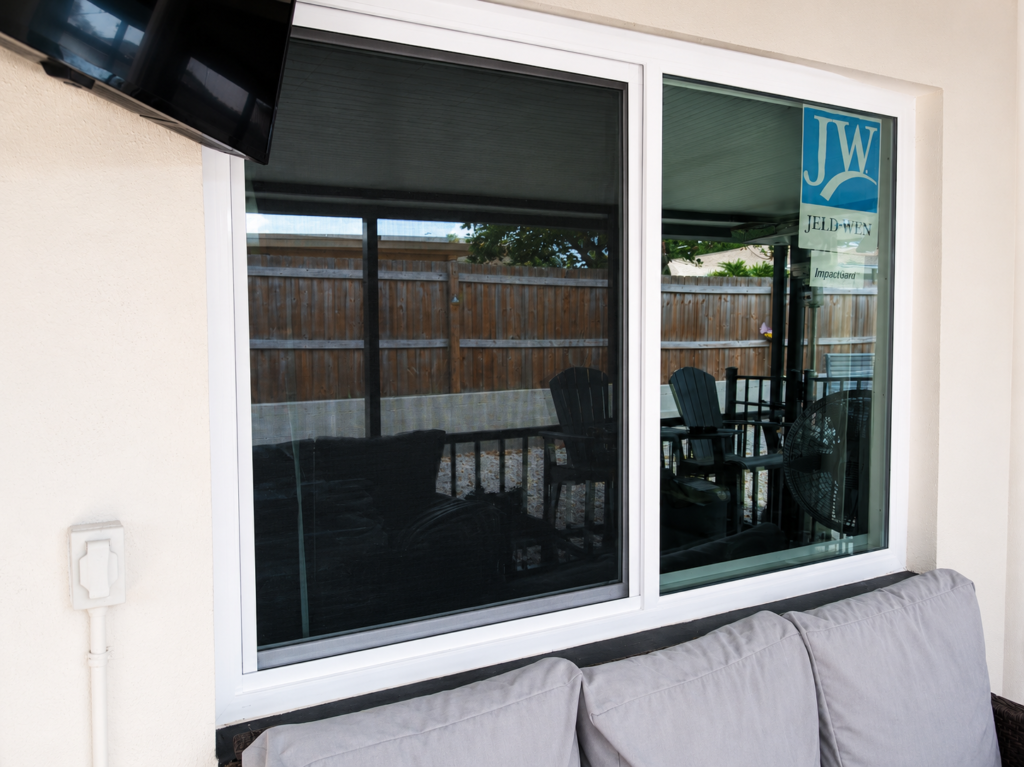
A slider window is a window where one or more panels slide left and right along a horizontal track instead of opening up and down. In Florida, slider windows are one of the most common window types because they fit wide openings, require no swing clearance, and come in impact-rated versions built for hurricane season in Pinellas County and across the Gulf Coast.
Most homeowners already have at least one slider and don’t know it by name. But when it comes time to replace windows, upgrade to impact glass, or meet egress code in a bedroom, knowing exactly how a slider window works, and where it fits and where it doesn’t, saves you from the wrong order and a failed inspection.
This guide covers what a slider window is, the two main types, how it compares to casement and single-hung windows, Florida egress and impact code rules, real cost ranges for Pinellas County, and when a slider is the right call, and when it isn’t.
How does a slider window work?
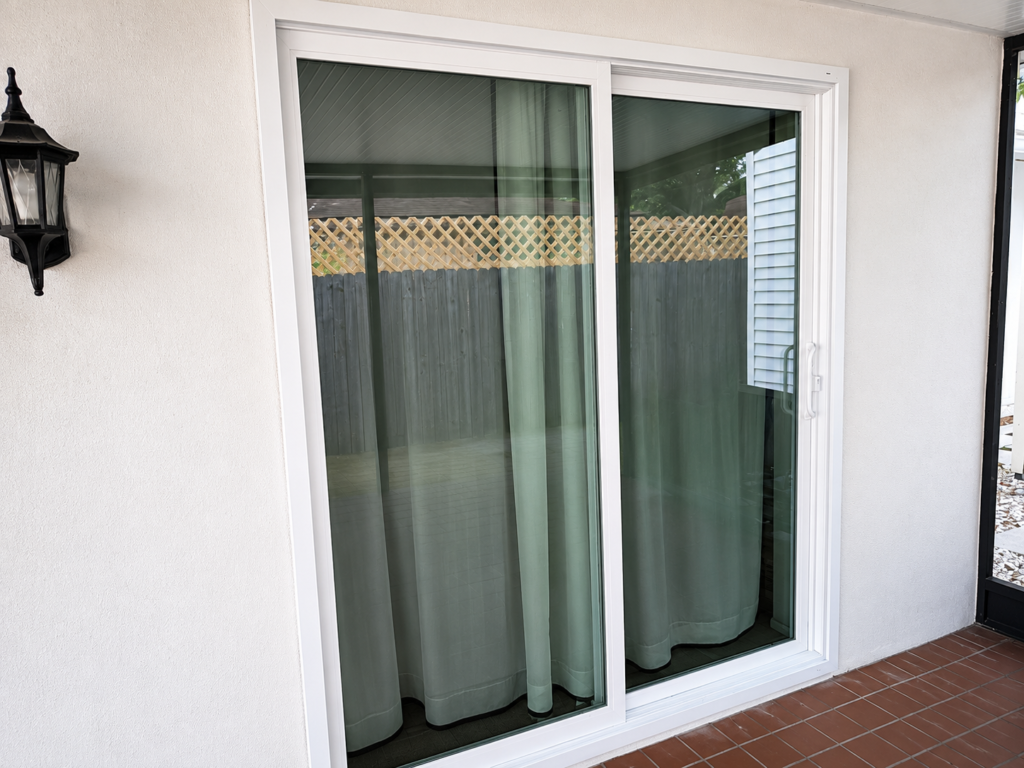
A slider window has one or two sashes that ride in horizontal tracks built into the frame. You push the sash left or right to open it. No crank. No lifting. Just a smooth side-to-side motion along the track.
That simplicity is why windows show up so often in Florida kitchens, bedrooms, and living rooms. Reaching over a counter to push a panel sideways takes far less effort than lifting a heavy sash straight up, especially in Florida’s heat. They’re also accessible for homeowners with limited shoulder mobility who find the vertical push of a single-hung window difficult.
When the window is closed, both panels sit flush in the frame. Quality slider windows use compression seals and interlocking meeting rails to limit air and water infiltration. The track itself stays inside the frame envelope, so nothing swings into a walkway or patio space outside.
What are the two types of slider windows?
| Type | How it works | Best for |
| Single slider | One fixed panel, one sliding panel | Most residential openings; more energy-efficient because fewer moving seals |
| Double slider | Both panels slide | Wide openings needing more airflow; easier cleaning from both sides |
Single slider windows
A single slider has one stationary panel and one that moves. Because only one sash travels on the track, there are fewer seal joints where air can leak. That makes single sliders slightly more energy-efficient than double sliders, all else equal. They’re the most common type in Pinellas County homes.
Double slider windows
Both panels move on a double slider. You can open either side or both, which gives more airflow flexibility in wider openings. Both sashes usually lift out for cleaning. The tradeoff is a small increase in potential air leakage at the center meeting rail compared to a single slider.
Slider window vs casement vs single-hung: which fits where?
This is the question most homeowners face when planning a window replacement in Clearwater or anywhere across Pinellas. The short answer: the opening shape and use case decide it, not personal preference.
| Feature | Slider window | Casement window | Single-hung window |
| Opening direction | Horizontal | Swings outward | Vertical (bottom sash up) |
| Max ventilation | ~50% of opening | ~100% of opening | ~50% of opening |
| Best opening shape | Wide, horizontal | Tall, narrow | Tall, narrow |
| Swing clearance needed | None | Yes, outside swing | None |
| Over-counter use | Excellent | Good (crank reach) | Harder to push up |
| Energy efficiency | Good | Slightly better seal | Good |
| Typical installed cost | ~$1,100 | ~$2,000 | ~$1,500 |
| Impact-rated option | Yes | Yes | Yes |
Slider windows win on wide openings. A horizontal opening that’s wider than it is tall is exactly what a window is designed for. Put a casement in that same opening, and you get a tall window squeezed into a wide rough opening, which wastes glass and looks wrong.
Casement windows win on ventilation. The whole sash swings open on a casement, so you get the full opening breathing. A window only ever opens halfway, since one panel covers the other. If a bedroom or living room needs maximum airflow, a casement pulls more breeze.
Single-hung windows suit tall, narrow openings. Bedrooms and bathrooms in older Pinellas homes often have tall, narrow rough openings built for single-hung windows. Swapping to a slider in that shape wastes most of the frame width.
One detail Florida homeowners often miss: if you’re replacing windows in an older home and you switch from single-hung to slider, the “like-for-like” replacement exception does not apply. Florida building departments accept like-for-like replacements of the same style without requiring current egress dimensions, but switching window types, such as single-hung to slider, means the new window must meet full current code requirements. That matters most in bedrooms.
Do slider windows meet Florida egress code?
Yes, slider windows can meet egress requirements in Florida, but sizing is the catch.
The Florida Building Code (8th Edition, 2023) requires bedroom windows to provide a minimum net clear opening of 5.7 square feet, with a minimum clear height of 24 inches and a minimum clear width of 20 inches. The net clear opening is what actually opens, not the full window size.
Here’s where windows trip people up. Because only one panel opens on a single slider window, the clear opening is roughly half the total window width. So a window unit that is 48 inches wide only gives you about 24 inches of clear width when open. You need to size the whole unit larger than you would a casement to hit the same net clear opening.
Quick slider window egress check for Florida bedrooms:
- Net clear opening needed: 5.7 sq ft minimum
- Minimum clear height: 24 inches
- Minimum clear width: 20 inches
- For a single slider: the sliding panel alone must meet these minimums
- Confirm unit sizing with your contractor or building department before ordering
Slider windows work well as egress windows when the opening is wide enough, since a larger overall unit gives you more than enough clear space. The mistake is ordering a standard-size window assuming the full width counts. Only the opening counts. A licensed contractor confirms this sizing before the window ships.
Impact slider windows in Pinellas County: what the code requires
Pinellas County sits in Florida’s Wind-Borne Debris Region (WBDR). The county is surrounded by water on three sides, and design wind speeds across Pinellas run 140 to 160 mph depending on proximity to open water. That means any permitted window installation, including windows, must either be impact-rated or paired with a permanent code-approved shutter system.
For new construction in Pinellas County, impact-rated windows are effectively required for every opening. For window replacements, the 25% rule applies: if you replace more than 25% of your home’s glazed area in a single permitted project in a WBDR, all replacement windows must meet impact standards.
Every impact-rated window sold in Florida must carry a Florida Product Approval number (FL#), which confirms it passed ASTM E1886 and E1996 testing for missile impact and cyclic wind pressure. Ask your contractor for the FL# before any window is ordered.
The December 31, 2026 code change. The Florida Building Code 9th Edition takes effect December 31, 2026. It tightens performance requirements for properties within five miles of tidal water, which covers virtually every neighborhood in Pinellas County, from Clearwater Beach to Dunedin to Safety Harbor. If your permit is accepted before that date, your project follows the current 8th Edition rules. If it goes in after, the new standards apply. Homeowners planning a slider window replacement before year-end have a reason to move sooner rather than later.
What do slider windows cost in Pinellas County?
Slider window costs in Florida depend on size, glass package, frame material, and whether the unit is impact-rated. Here are real 2026 ranges for Pinellas County homeowners:
| Slider window type | Installed cost (per window) |
| Standard (non-impact) window | $400 – $800 |
| Impact-rated window, vinyl frame | $800 – $1,400 |
| Impact-rated window, aluminum frame | $1,100 – $1,800 |
| Large or custom impact window | $1,800 – $3,000+ |
Ranges reflect Pinellas County coastal wind code requirements. Full-home projects (10-20 slider windows and standard windows combined) typically run $12,000-$35,000 installed. Confirm current pricing with your contractor, as material costs and permit fees vary.
The insurance math. Florida Statute §627.0629 requires insurers to apply wind mitigation discounts of 10-45% when all openings in a home carry documented impact-rated protection. Pinellas County homeowners typically save $400-$1,200 per year on home insurance premiums after a full impact window upgrade. On a $15,000 project, that’s full payback in under 15 years from insurance savings alone, before energy savings are added.
Energy savings. Low-E coated impact slider windows reduce heat transfer by 20-30% (Lawrence Berkeley National Laboratory), which in Pinellas County’s year-round cooling climate means real monthly savings on your FPL bill.
Where do slider windows work best in a Florida home?
Slider windows fit some spots well and others poorly. Here’s how to think about placement before you order.
Good fits:
- Living rooms and great rooms with wide horizontal openings where you want a broad view and natural light without a sash blocking the middle
- Kitchen windows over the counter, where pushing a panel sideways is far easier than lifting a heavy sash straight up
- Bedrooms with wide rough openings, as long as the sliding panel meets egress sizing
- Garage utility rooms and laundry rooms where a low-maintenance window that doesn’t swing into the space is the priority
- Coastal-facing walls where no external swing clearance exists for a casement
Poor fits:
- Tall, narrow openings where a single-hung or casement fills the shape better
- Rooms needing maximum ventilation, where a casement’s full opening beats the slider’s 50% opening
- Openings directly in high-wind pressure zones on upper floors of barrier island homes, where a casement’s tighter seal has a slight edge
- Bedrooms in older Pinellas homes with small existing rough openings, where hitting egress minimums with a slider is difficult without structural modification
One Clearwater Construction works across Clearwater, St. Petersburg, Dunedin, Palm Harbor, Safety Harbor, Largo, Tarpon Springs, and Oldsmar. In a recent triplex window project in Clearwater, the homeowner noted that Alex “kept in great communication the whole time,” making the window selection and installation process smooth even for tenants in occupied units. For projects where placement decisions involve egress or impact compliance, we review every opening before anything is ordered.
Should you choose a slider window or a different style?
Use this as a quick decision guide before you call a contractor.
Choose a slider window if:
- Your opening is wider than it is tall
- You need easy side-to-side operation, especially over a counter or in a room with limited reach
- You want a broad, horizontal view with minimal frame interruption
- You’re replacing an existing window in the same opening
Choose a casement window if:
- Maximum ventilation is the priority
- The opening is tall and narrow
- You’re on an upper floor or a barrier island where a tighter closed seal matters
- The space outside allows a full outward swing
Choose a single-hung window if:
- You’re doing a like-for-like replacement in a tall, narrow opening in an older home
- The existing rough opening was built for vertical operation
If you’re unsure which style suits a specific opening, a contractor who installs all three types can give you a straight answer in a site visit, not a sales push for whichever window they have in stock.
Get a free estimate from One Clearwater Construction. We handle the sizing, the Florida Product Approval confirmation, the permit, and the inspection. Call (727) 314-2191 or reach us at [email protected].
Frequently Asked Questions
What is a slider window?
A slider window is a window where one or more panels slide horizontally along a track to open. Unlike single-hung or double-hung windows that move up and down, a slider moves left to right. The most common version has one fixed panel and one sliding panel. Windows are popular across Florida because they fit wide openings, need no swing clearance outside, and come in impact-rated versions built for hurricane protection.
Are slider windows good for Florida homes?
Yes, windows are well-suited to Florida homes, particularly in Pinellas County, when they are sized for the opening and impact-rated. They handle wide horizontal openings cleanly, require no outdoor swing clearance, and are easy to operate in the heat. The key consideration in Florida is that they must carry a Florida Product Approval number and meet the 140-160 mph wind design speeds required in Pinellas County’s Wind-Borne Debris Region.
Do slider windows meet egress requirements in Florida?
They can, but sizing is critical. A single slider only opens halfway, so the sliding panel alone must meet Florida’s minimum net clear opening of 5.7 square feet, with at least 24 inches of clear height and 20 inches of clear width. A window unit must be sized larger than a casement unit to achieve the same net opening. Confirm egress sizing with your contractor or building department before ordering.
How much do slider windows cost in Florida?
Impact-rated windows in Pinellas County typically run $800-$1,800 installed per window depending on size and frame material. Standard non-impact windows start around $400-$800, but in most of Pinellas County, impact-rated units are required for new construction and triggered by the 25% replacement rule. Full-home projects combining windows and other window types usually run $12,000-$35,000 installed.
Can slider windows be impact-rated for hurricanes?
Yes. Impact-rated windows are widely available and commonly installed in Pinellas County and across coastal Florida. They must carry a Florida Product Approval number (FL#) confirming they passed ASTM E1886 and E1996 testing. Impact sliders, like all impact-rated openings, can qualify your home for Florida’s wind mitigation insurance discounts under Florida Statute §627.0629, typically $400-$1,200 per year in premium savings.
What is the difference between a slider and a casement window?
A slider moves horizontally on a track. A casement window is hinged on one side and swings outward with a crank. Casements open fully, giving 100% of the frame width as ventilation, while a window opens about 50%. Casements also seal tighter when closed. Sliders work better in wide, horizontal openings and spaces without swing clearance. Casements work better in tall, narrow openings where maximum airflow is the priority.