
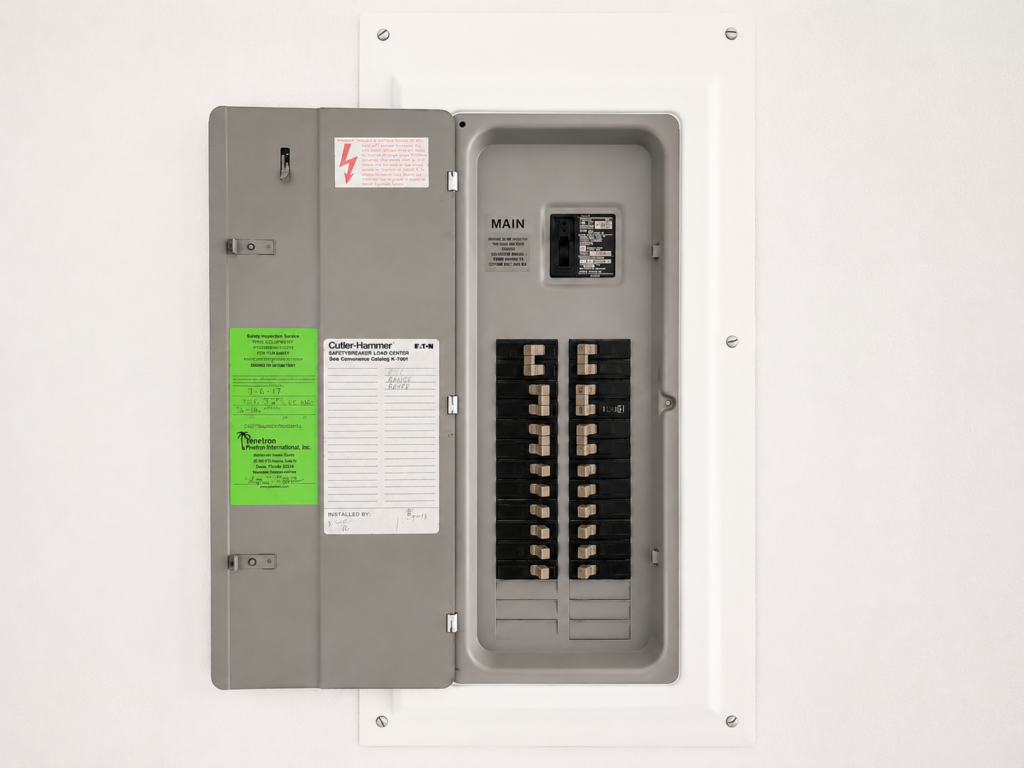
- What Triggers a Panel Upgrade for a Room Addition
- Panel Upgrade vs. Sub-Panel: Which Do You Need
- What a Panel Upgrade Costs in Clearwater (2026)
- Older Homes and Problem Panels in Pinellas County
- What the Permit Process Looks Like
-
FAQ
- Does Every Room Addition Require an Electrical Panel Upgrade in Florida?
- How Much Does an Electrical Panel Upgrade Cost for a Room Addition in Clearwater?
- What Is the Difference Between a Panel Upgrade and a Sub-Panel for a Room Addition?
- Do I Need a Separate Electrical Permit for My Room Addition in Clearwater?
- Does Florida Require Surge Protection on a New Electrical Panel?
Not every room addition in Clearwater requires a panel upgrade. But many do, and finding out mid-project instead of upfront is one of the most common ways a room addition budget gets blown.
A licensed electrician assesses your current panel capacity before the permit is submitted. That assessment determines whether you need a full panel upgrade, a sub-panel addition, or neither. Here is what drives that decision in Pinellas County.
What triggers a panel upgrade for a room addition in Clearwater?
A room addition adds new circuits. Every new circuit draws from the main panel’s total capacity. Whether your current panel can handle those new circuits depends on three things.
Current panel amperage. Most Clearwater homes built before 1990 have 100-amp service. A modern home with central air conditioning, a washer and dryer, an electric range, and standard lighting is already running close to capacity on 100 amps. Adding a room with its own HVAC connection, lighting circuits, outlets, and potentially a mini-split pushes a 100-amp panel to or past its limit.
What the new room contains. A basic bedroom adds lighting and outlet circuits, a modest load. A home office with dedicated computer circuits adds more. A master suite with a full bathroom, an electric water heater, and a mini-split adds significantly more. An in-law suite or ADU with a kitchenette adds the most. The scope of the room determines the amperage demand of the addition.
How many open slots remain in your current panel? Even a 200-amp panel can run out of breaker slots. If your panel has no open slots, a sub-panel addition is the path forward, not necessarily a full panel replacement.
The OCC room additions service includes an electrical assessment as part of the planning process. Before a permit is submitted for any room addition in Clearwater, the electrical load is calculated to confirm whether the existing panel can support the new scope.
Panel upgrade vs. sub-panel: which one does your addition actually need?
These are different solutions to different problems. Getting clarity on which applies to your project saves real money.
| Situation | Right Solution |
| 100-amp panel, adding HVAC + full bath + kitchen | Full panel upgrade to 200-amp |
| 200-amp panel with open slots, basic room addition | New circuits from existing panel — no upgrade needed |
| 200-amp panel with no open slots, addition scope is modest | Sub-panel addition |
| Federal Pacific Stab-Lok or Zinsco panel, any addition | Full panel replacement required |
| 200-amp panel, adding generator, EV charger, or pool | Upgrade to 400-amp |
| Any new panel installed in Florida | NEC 2026 surge protection required |
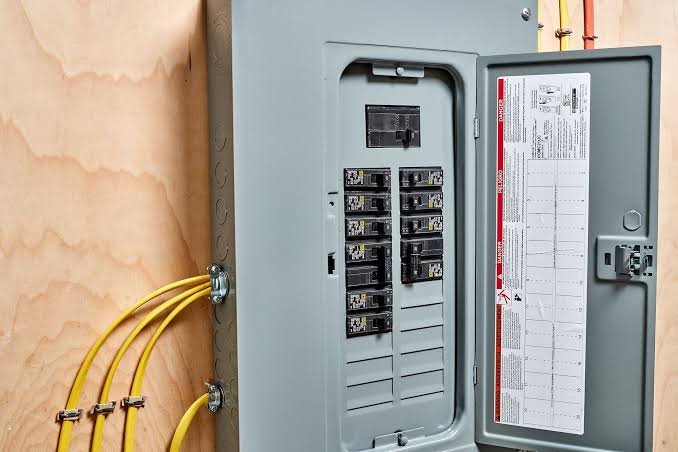
A sub-panel is often the right answer for a room addition where the main panel is in good condition but full. Rather than replacing the whole panel, a sub-panel extends power to the new space independently. A sub-panel is a good solution to the electrical needs created when you add on a room. Instead of adding circuit breakers to your main electrical panel, simply add a sub-panel.
A full upgrade is needed when the current amperage is genuinely insufficient for the home’s total load, both existing and new. Adding a master suite with a mini-split to a home on 100-amp service almost always requires upgrading to 200-amp before the permit can be issued.
For homeowners planning a more complex addition, a second story, a garage-to-ADU conversion, or a full in-law suite, the electrical scope is a core part of what the OCC Clearwater interior remodel planning guide walks through before any construction begins.
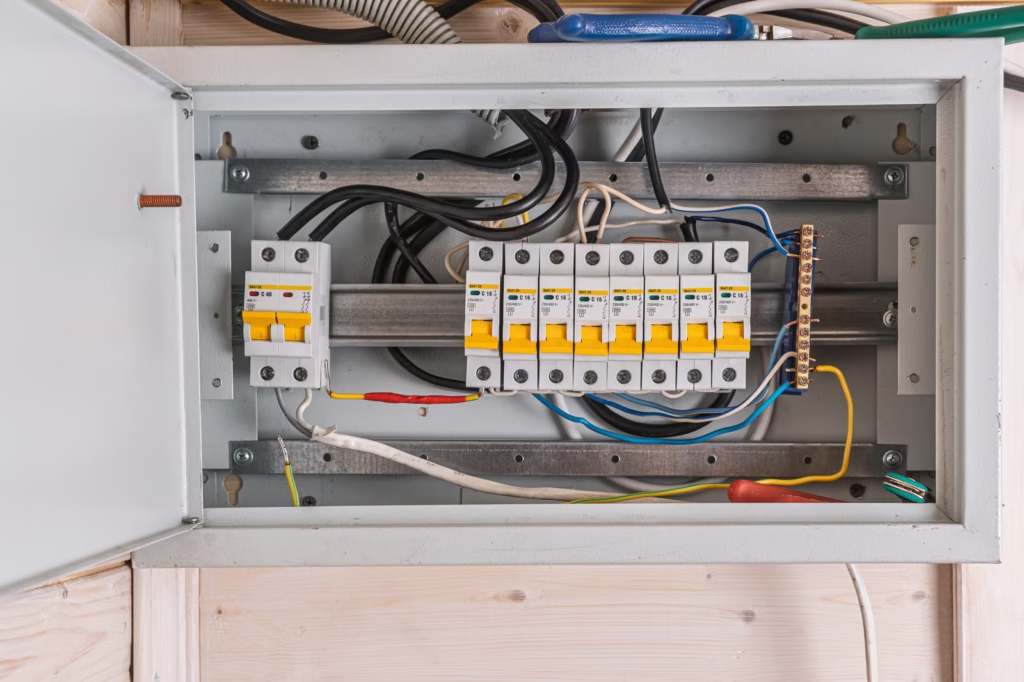
What does a panel upgrade cost in Clearwater? (2026 prices)
All figures below are from Florida-specific licensed electrical contractors, verified from 2026 sources. OCC coordinates licensed electricians for all panel work on room addition projects.
| Upgrade Type | Florida Cost Range (2026) | What’s Included |
| 100-amp to 200-amp upgrade | $2,500 to $4,500 | New panel, service entrance cable, meter socket if needed, permit, inspection |
| 200-amp panel replacement (like-for-like) | $2,000 to $3,500 | Panel replacement, code corrections, permit |
| Sub-panel addition | $800 to $1,500 | Sub-panel, wiring to new space, permit |
| 200-amp to 400-amp upgrade | $4,000 to $7,000+ | Larger conductors, meter base upgrade, utility coordination |
| Service entrance replacement (weatherhead/meter base) | $500 to $1,500 | Exterior components only, added to panel cost |
| Surge protection (NEC 2026 required on all new panels) | $150 to $400 | Whole-home surge protector installed at panel |
A standard 200-amp panel upgrade in Florida typically costs between $2,500 and $4,500 and takes a licensed electrician 4 to 8 hours to complete.
The usual cost of an electrical panel in Florida is between $1,000 and $2,000 fully installed for most standard replacements, but this may increase to $5,000 to $10,000 for a 400-amp panel or a complete panel relocation.
What affects the final number in Pinellas County:
- Meter base condition. If the meter base is corroded, undersized, or not rated for the new ampacity, it needs replacing and adds $500 to $1,500.
- Service entrance wiring. Running new conductors from the utility connection to the panel adds labor and material cost, especially when the panel location changes.
- Code corrections. GFCI and AFCI breaker upgrades may be required to bring the panel into NEC 2026 compliance during replacement.
- Utility coordination. Duke Energy Florida pulls and replaces the meter during an upgrade. That scheduling step adds time but no cost.
Older homes and problem panels in Pinellas County
Clearwater’s older housing stock, homes built between the 1950s and 1980s, present specific electrical challenges that come up regularly during room addition permitting.
Federal Pacific Stab-Lok panels. Common in Florida homes built between 1950 and 1990. These panels have a documented history of breakers failing to trip under overload or fire risk. Florida insurers are increasingly denying coverage or requiring replacement of Federal Pacific and Zinsco panels before they will write or renew a homeowners policy. If your home has one of these panels and you are pulling a permit for a room addition, replacement is almost certain to be required.
Zinsco panels. Similar history and similar insurer response. If a panel inspection identifies a Zinsco panel, plan for replacement as part of the additional budget.
60-amp fuse boxes. Some pre-1960s Clearwater homes still have fuse panels providing only 60-amp service. These are inadequate for any modern room addition and require full replacement before a room addition permit can be issued.
Aluminum wiring. Homes built between 1965 and 1973 sometimes have aluminum branch circuit wiring. Aluminum wiring connections loosen over time and create fire risk at outlets and switches. A room addition that involves opening walls is an opportunity to assess and address aluminum wiring in the affected areas.
If your home has storm damage to the electrical system from Helene or Milton, that repair scope interacts directly with a room addition permit. The OCC guide to repairs and renovations after hurricanes covers how post-storm electrical damage is documented and permitted alongside new construction.
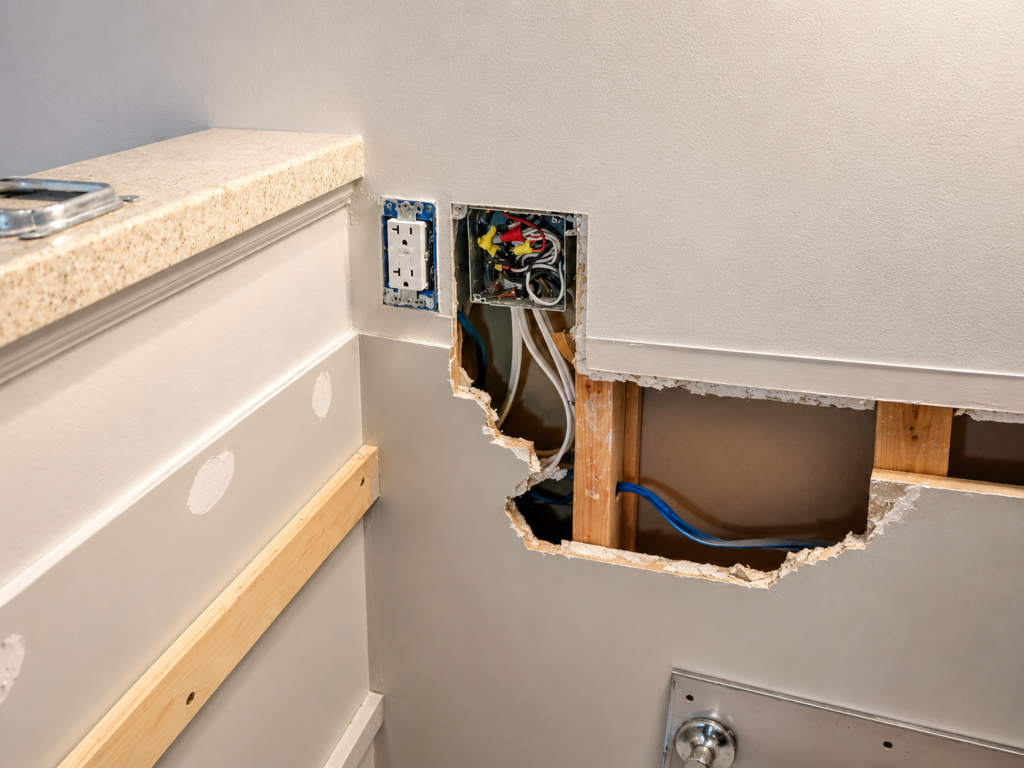
What the permit process looks like for electrical work in a room addition
The building permit for a Clearwater room addition covers all subtrades under its scope. Electrical work for the addition is included in the building permit; it does not require a separate additional permit filed independently on top of the building permit.
What it does require:
- An electrical load calculation as part of the permit application drawings
- Panel capacity confirmation or upgrade scope documented by the electrician
- Rough electrical inspection before drywall goes up
- Final electrical inspection as part of the overall final inspection
If the panel upgrade involves utility coordination, which a 200-amp service upgrade always does, Duke Energy Florida pulls the meter before work begins and restores service after inspection passes. Your electrician coordinates this directly. In Clearwater, allow one to three business days for utility scheduling.
Plan review for a room addition in Pinellas County takes 10 to 30 business days under Florida Statute HB 267. Adding a panel upgrade to the scope does not extend that timeline; it is part of the electrical drawings submitted with the permit package.
Before hiring any electrician for panel work, verify their Florida license at www2.myfloridalicense.com. An electrical contractor’s license (EC prefix) is required for panel replacement in Florida, not a handyman or general laborer. For what else to check before signing any contract, the OCC contractor hiring guide walks through every step.
For remote homeowners managing a Pinellas property from out of state, coordinating electrical upgrades alongside a room addition is exactly the kind of multi-trade sequencing the OCC remote home renovation service handles directly.
Ready to plan your room addition? Call One Clearwater Construction at (727) 314-2191 or request a free estimate. We serve Clearwater, St. Petersburg, Dunedin, Palm Harbor, Safety Harbor, Largo, Tarpon Springs, and Oldsmar.
Frequently Asked Questions
Does every room addition require an electrical panel upgrade in Florida?
No — whether you need a panel upgrade depends on your current panel’s amperage, how many open slots remain, and what the new room contains. A basic bedroom addition on a 200-amp panel with open slots may need only new circuits; a full in-law suite with a mini-split on a 100-amp panel will almost certainly require upgrading to 200-amp service.
How much does an electrical panel upgrade cost for a room addition in Clearwater?
A standard 200-amp panel upgrade in Florida typically costs $2,500 to $4,500; a sub-panel addition runs $800 to $1,500. The final number depends on your starting amperage, whether the meter base needs replacing, and what code corrections are required to get a written quote from a licensed Florida electrical contractor before committing.
What is the difference between a panel upgrade and a sub-panel for a room addition?
A panel upgrade replaces the entire main panel with a higher-capacity unit necessary when your home’s total electrical load exceeds the current panel’s rating. A sub-panel is a smaller distribution point wired from the main panel to supply the new addition independently the right choice when the main panel is in good condition but has no open breaker slots.
Do I need a separate electrical permit for my room addition in Clearwater?
No. The building permit for your room addition covers all subtrades under its scope, including electrical work. Electrical does not require a separate additional permit on top of the building permit. What is required is an electrical load calculation as part of the permit drawings, rough electrical inspection before drywall, and final electrical inspection at close-out.
Does Florida require surge protection on a new electrical panel?
Yes. The NEC 2026 code, now effective in Florida, requires surge protection on all new panels installed during an upgrade or replacement. Mandated additions of GFCI and AFCI dual-function protection also incrementally increase hardware costs on panel replacements that must meet current code. Budget $150 to $400 for a whole-home surge protector added at the panel.