
Key Takeaways
- A screened lanai is an aluminum frame and screen, open to the air and not climate-controlled.
- A Florida room is an enclosed addition, often an old porch that was later glazed in.
- A sunroom is a glassed-in room built for three-season or four-season comfort.
- In Pinellas County, any glass enclosure must use Florida Product Approval-rated impact glass.
- OCC builds all three and pulls the permit in your name.
The quick version of sunroom vs Florida room vs screened lanai comes down to glass and climate. A screened lanai uses aluminum framing and screen, a Florida room is an enclosed addition often glazed in over time, and a sunroom is a glassed-in room built for year-round comfort. One Clearwater Construction builds all three across Pinellas County.
The three names get tossed around like they mean the same thing. They do not. Pick the wrong one, and you either pay for glass you did not need, or you end up with a room that bakes from May through September.
This guide breaks down what each space actually is, the Florida glass rule that applies to all of them, what they cost, and how to choose the right one for your home.
Sunroom vs Florida Room vs Screened Lanai
Before the details, here is the difference at a glance. The three spaces sit on a spectrum, from open-air to fully enclosed and climate-controlled.
| Feature | Screened lanai | Florida room | Sunroom |
| Walls | Aluminum frame + screen | Enclosed, often an older glazed porch | Glassed-in |
| Climate controlled | No | Optional (HVAC or mini-split) | Yes, three- or four-season |
| Keeps bugs out | Yes | Yes | Yes |
| Best for | Shaded, bug-free open-air space | Updating a transitional room | Year-round living space |
That table covers the short version. The sections below explain each one in plain terms, using what One Clearwater Construction actually builds.
What Is a Screened Lanai or Screen Enclosure?
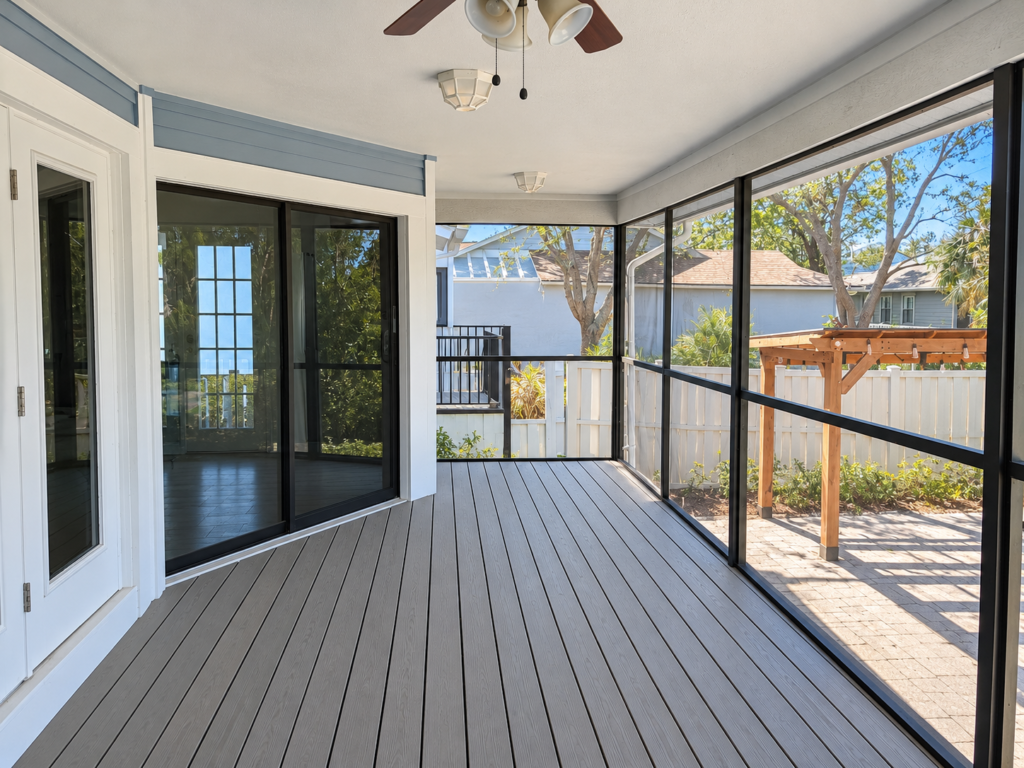
A screened lanai is the most open of the three. It uses structural aluminum framing and screen, with no glass, so it keeps the bugs out while letting the breeze through.
One Clearwater Construction describes its screen work as “pool cages, lanai extensions, and panoramic-view enclosures with structural aluminum framing engineered for Florida hurricane-zone wind loads.” The point of the space is simple.
Here is what a screened lanai gives you:
- Protection from bugs, rain, and the harshest sun.
- More usable outdoor hours across the year.
- Open-air comfort without a glassed-in feel.
- Framing built to handle hurricane-zone wind loads.
Because it is not sealed or conditioned, a screened lanai is not a year-round climate-controlled room. It is the right call when you want shade and a bug-free patio, not a heated and cooled space. You can see the range of screen and outdoor work on the outdoor living page.
OCC does not publish a set price for screen enclosures, since they vary by size and layout. For a lanai or enclosure, the number comes from a written estimate.
What Is a Florida Room?
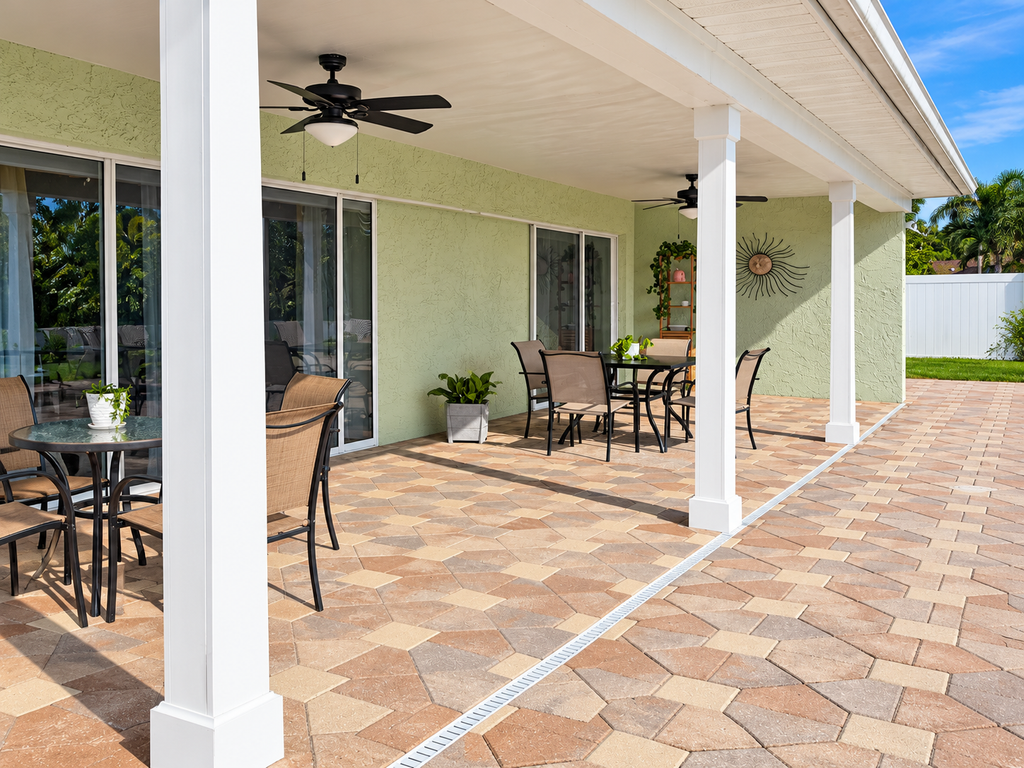
A Florida room sits in the middle of the three. In OCC’s own words, “a Florida room is an enclosed addition that transitions between the main living area and the outdoors.”
Most Florida rooms started as something else. The page notes that they “appear as screened porches that were later glazed in, or as dedicated additions with jalousie windows and minimal insulation.” That history is why so many of them need work.
A Florida room renovation usually means upgrading an older space, and OCC lists what that involves:
- Replacing old single-pane or jalousie glass with impact-rated glazing.
- Connecting the space to the home’s HVAC system or installing a mini-split.
- Repouring or repairing the concrete slab where the floor is cracked or sloped.
So a Florida room is for the homeowner who already has that in-between space and wants it to function the way they actually use it. The upgrade decides how comfortable it stays.
Three-Season vs Four-Season
The comfort level splits into two. A three-season Florida room “is genuinely comfortable from October through April,” which covers most of the year in Pinellas.
A four-season room goes further, with the glass and climate control to make it “usable year-round as a full living space.” That is the version that carries you through a Florida summer, and it is the more involved build of the two.
What Is a Sunroom?
A sunroom is the most finished of the three. It is a glassed-in room, and when it is built for year-round use, it holds its own against the heat.
OCC built “a custom sunroom enclosure in Dunedin using aluminum framing and insulated roof panels, designed for year-round use in Florida heat.” A large sunroom is usually sized for more than one use, often 200 to 400 square feet with room for a lounge plus a dining or office zone.
What separates a true year-round sunroom from a glass box that overheats comes down to three things:
- Low-e impact glass with a solar heat gain coefficient below 0.40.
- Insulated aluminum roof panels that keep the room cooler.
- Its own cooling, usually a mini-split or an extension of the home’s HVAC.
Without those, as OCC puts it, “the room is a three-season space at best.” Getting the glass, roof, and cooling right is what makes a sunroom livable in July.
Which One Is Right for Your Clearwater Home?
The best choice depends on how you want to use the space and how much of the Florida climate you want to keep out. There is no single winner, only the right fit for your goal.
Match your goal to the space with this guide:
| If you want… | Consider |
| Shade and a bug-free patio, open to the breeze | Screened lanai or enclosure |
| To update an old porch into a usable enclosed room | Florida room |
| A true year-round room that stays cool in summer | Four-season sunroom |
Those are the common paths, and a few plain rules help you land on one:
- Choose a screened lanai when you want outdoor feel with bugs and rain kept out.
- Choose a Florida room when you already have a transitional space to upgrade.
- Choose a sunroom when you want a finished, year-round room from the start.
If you are weighing a bigger project, the choice also ties into your wider plans. It helps to think it through alongside planning a room addition so the space fits the rest of the home
The Florida Glass Rule You Cannot Skip
One thing applies to every version with glass, and it is not up for debate. Pinellas County sits in a high-wind zone, and the building code treats these rooms accordingly.
OCC states it plainly: “Any glass enclosure sunroom, Florida room, or screened enclosure with glass panels must use Florida Product Approval-rated impact glass or an approved protection system.” The company adds that “this is not optional, and it is not negotiable.”
That rule is one reason these projects need a permit and proper engineering. One Clearwater Construction “manages every stage from engineering coordination through final inspection,” so you get one point of contact and one permit pulled in your name. It is the communication-first way the team keeps you in the loop instead of leaving you chasing the county.
What Each One Costs, and the Timeline
Cost tracks with how enclosed and conditioned the space is. A screen lets the most in and costs the least, while a four-season glass room costs the most. Every figure below is from OCC’s own pages, labeled estimated.
| Space | OCC estimated cost | Timeline |
| Screened lanai or enclosure | Quoted per project (free estimate) | Varies by scope |
| Florida room renovation | Starts around $20,000 | Plan review 10 to 30 business days |
| Four-season Florida room (200–300 sq ft) | $40,000 to $80,000 | Varies by scope |
| Sunroom as a full addition | $125 to $375 per square foot | 8 to 12 weeks after permit |
A few factors move where you land in those ranges:
- The size of the room and how it is framed.
- Whether it is screen, three-season glass, or four-season glass.
- Whether it needs its own mini-split, which OCC estimates at $3,500 to $5,000.
- Slab repair, roofing, and the electrical the space needs.
For a full breakdown of how these fit into a larger project, the room additions page lays out the scope. The exact number for your home comes from a written estimate, so you know the cost before work starts.
Not Sure Which Room Fits?
Ready for more space? Request a free estimate and we’ll match you to the right room, with the price clear before day one.
Frequently Asked Questions
What is the difference between a sunroom and a Florida room?
A sunroom is a glassed-in room built for three-season or four-season comfort, usually with low-e impact glass and its own cooling. A Florida room is an enclosed addition that transitions the living area to the outdoors, often an older screened porch that was glazed in. In short, a sunroom is typically the more finished, climate-ready version.
Is a screened lanai the same as a Florida room?
No. A screened lanai uses aluminum framing and screen with no glass, so it stays open to the air and is not climate-controlled. A Florida room is enclosed and can be connected to HVAC or a mini-split to stay comfortable.
Do sunrooms and Florida rooms need impact glass in Pinellas County?
Yes. OCC states that any glass enclosure sunroom, Florida room, or screened enclosure with glass panels must use Florida Product Approval-rated impact glass or an approved protection system. It is a high-wind zone requirement, not optional.
How much does a Florida room cost in Clearwater?
One Clearwater Construction says Florida room remodels in the Clearwater and Tampa Bay area typically start around $20,000. A four-season room of 200 to 300 square feet runs an estimated $40,000 to $80,000. A written estimate gives you the exact figure.
How long does a sunroom take to build?
OCC estimates about 8 to 12 weeks of build time after the permit is issued. For Florida room projects, plan review in Pinellas County takes 10 to 30 business days before the build begins.
Can you turn a screened lanai into a sunroom?
Yes. Enclosing an existing lanai is one of the ways OCC builds a sunroom, along with a new addition or converting part of a garage. Moving from screen to glass means adding impact glazing and, for year-round use, insulation and cooling.