
Table of Contents
Key Takeaways
- Mold growth starts within 24 to 48 hours of flooding; extraction and drying cannot wait for an insurance adjuster
- Most standard homeowners insurance policies do not cover flood losses; a separate NFIP or private flood policy is required
- Pinellas County properties have filed 51,764 NFIP flood insurance claims totaling $3.7 billion in payouts since 1978. Flood damage here is not rare
- Document everything before touching anything: photos and video taken before cleanup. Protect your insurance claim
- All structural, electrical, and plumbing repairs after flood damage require a permit in Pinellas County
When water enters your home, the clock starts immediately. Mold can begin growing on wet drywall, insulation, and framing within 24 to 48 hours, according to the EPA, CDC, and OSHA and in Pinellas County’s heat and humidity, that window often runs closer to 24 hours. The five steps below are what a licensed Clearwater contractor does first, in this exact order, every time.
This guide covers water removal for flooded homes by storm surge, hurricane rainfall, or plumbing failure. The process is the same whether you have two inches or two feet. What changes is the equipment and the timeline.
Step 1 — Make sure it is safe to enter your flooded homes
Do not walk into flooded homes without checking these four things first. Skipping this step puts you at serious risk.
Electricity. Water and live circuits are a fatal combination. If water has reached outlets, appliances, or your electrical panel, call your utility provider to shut off power at the meter before anyone enters. Do not assume your breaker panel is safe to touch if it is near water. Pinellas County homeowners can contact Duke Energy Florida at 800-228-8485 to request emergency disconnection.
Structural damage. Look at the flooded homes from outside before entering. Visible cracks in the foundation, a shifted roofline, or walls bowing outward are signs the structure may be compromised. If you see any of these, do not enter. Contact a Florida-licensed structural engineer to assess the property before any work begins.
Water source and category. Where did the water come from? Flood water that entered from outside storm surge, overland flooding, or sewage backup is classified as Category 3 by IICRC standards. Category 3 water contains pathogens and requires a completely different cleanup protocol than a clean water supply line break. Do not use household fans or shop vacuums on Category 3 water. You can spread contamination to dry areas.
Gas. If you smell gas, leave immediately and call 911 and your gas utility from outside the flooded homes. Do not flip any light switches.
Once you have confirmed electricity is off, the structure is safe, and you know the water source, you can enter. Bring rubber boots, gloves, and an N95 mask for any Category 3 situation.
Step 2 — Document everything before you touch anything
This step protects your insurance claim. Most Clearwater homeowners skip it in the urgency of cleanup. That decision costs them money later.
Before moving furniture, pulling flooring, or starting any extraction:
- Walk through every affected room and record a video. Narrate what you see: the water level marks on the walls, which materials are soaked, the source of entry.
- Photograph all four walls in every room, ceiling damage, flooring, and all damaged contents.
- Photograph your electrical panel, HVAC system, water heater, and any structural damage you can see.
- Do not throw anything away until your adjuster has documented it or you have photographic evidence. Even destroyed materials are part of your claim.
Under Florida Statute 627.70131, your insurer must acknowledge receipt of your claim within 14 days, begin its investigation promptly, and pay or deny the claim within 90 days of receiving proof of loss. Your documentation triggers that clock. Start it immediately.
Florida law also allows you to begin emergency mitigation steps right away without voiding your claim. You do not need to wait for an adjuster to arrive before starting extraction. What you cannot do is dispose of materials or begin reconstruction without documentation.
If you own a Pinellas property remotely and cannot get there immediately, the OCC remote home renovation service includes post-storm documentation and emergency coordination for out-of-state owners.
Step 3 — Extract standing water as fast as possible
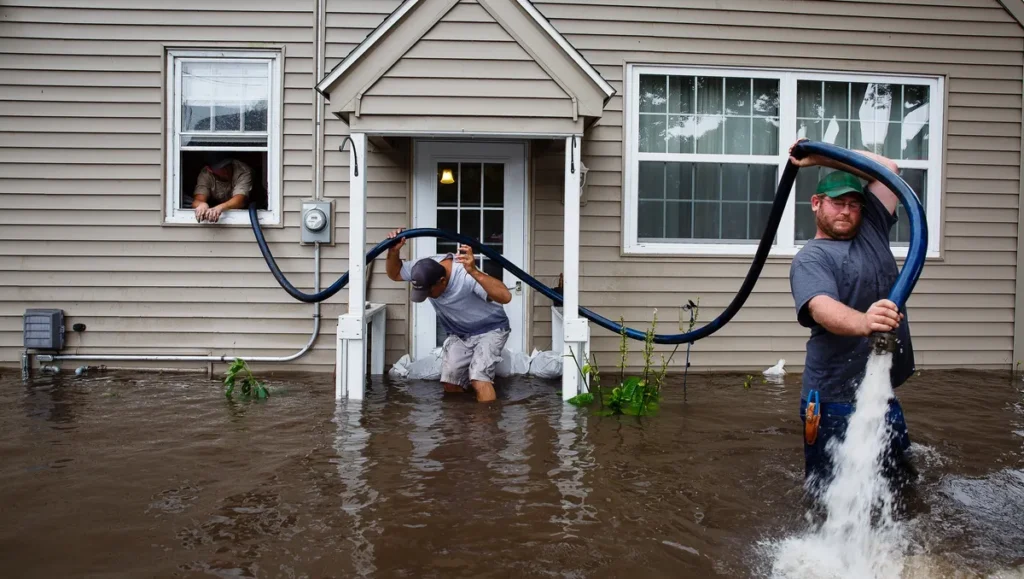
Speed here is the difference between a drying job and a mold remediation job.
In Florida, warm air and high humidity slow natural evaporation, so every extra hour of water sitting on the floor gives it more time to wick into base plates, cabinets, drywall, and wall cavities. What looks like a floor problem becomes a wall problem within hours.
Match the tool to the volume of water:
| Water Volume | Right Tool | What It Does |
| Surface puddles, small area | Wet/dry vacuum | Picks up shallow water quickly |
| Multiple rooms, deeper water | Submersible pump | Removes bulk volume fast |
| Severe flooded homes, multiple floors | Truck-mounted extraction | Highest removal rate, used by restoration crews |
| Under flooring, wall cavities | Specialty injection systems | Reaches moisture standard tools miss |
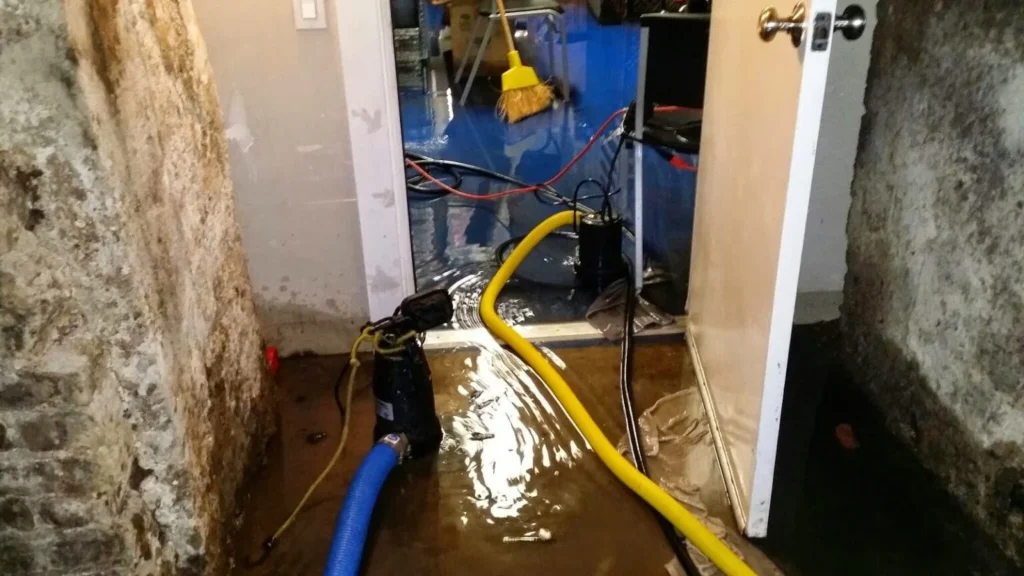
For most Pinellas County flooded homes after a hurricane or storm surge event, a submersible pump is the minimum effective tool. Rental units are available at most Clearwater-area hardware stores. If water covered multiple rooms or reached wall height, professional extraction equipment removes water faster and reaches areas a rental pump cannot.
Do not use a standard household vacuum on standing water. Do not use fans before water is extracted fans spread moisture to dry areas. Extract first, then ventilate.
Dispose of extracted water away from your foundation. Discharging it onto a neighbor’s property or into a storm drain during an active flood event can violate local ordinances.
Step 4 — Dry the structure, not just the floor
Extraction removes visible water. Drying removes the moisture that stays behind and it is the step most homeowners underestimate.
After water is extracted, structural drying begins. This is not opening windows and running box fans. Structural drying means:
- Air movers placed at the base of walls to push moisture out of framing and drywall
- Commercial dehumidifiers running continuously to pull moisture from the air and accelerate evaporation from materials
- Moisture meters used daily to track readings in walls, subfloor, and framing until all readings return to normal
The EPA recommends drying water-damaged areas and items within 24 to 48 hours to help prevent mold growth, with indoor humidity targets of 30 to 60 percent. The CDC advises drying fully and quickly within 24 to 48 hours, recommending indoor humidity no higher than 50 percent.
In a Clearwater flooded homes with ambient outdoor humidity running 75 to 85 percent during hurricane season, achieving those targets requires mechanical dehumidification not open windows. Opening windows in Florida summer humidity after a flood adds moisture to the space, not removes it.
HVAC systems need special attention. If your air handler pulls in humid or contaminated air during the event, running it without inspection can spread mold spores through every duct in the house. Have your HVAC system assessed before turning it back on after a flood.
If you need professional drying equipment for Clearwater flooded homes, the OCC water removal service for flooded homes can be dispatched to Pinellas County properties with commercial-grade equipment.
Typical drying times for Pinellas County flooded homes by scope:
| Scope | Typical Drying Time |
| Single room, clean water, caught quickly | 2 to 4 days |
| Multiple rooms, clean water | 4 to 7 days |
| Storm surge or Category 3, multiple rooms | 7 to 14 days |
| Structural materials saturated (framing, subfloor) | 14 to 21+ days |
Do not close up walls, replace flooring, or paint over wet surfaces. Covering moisture traps mold inside the wall cavity. A moisture meter reading at or below baseline for the material is the only reliable sign that drying is complete.
Step 5 — Assess what stays and what goes
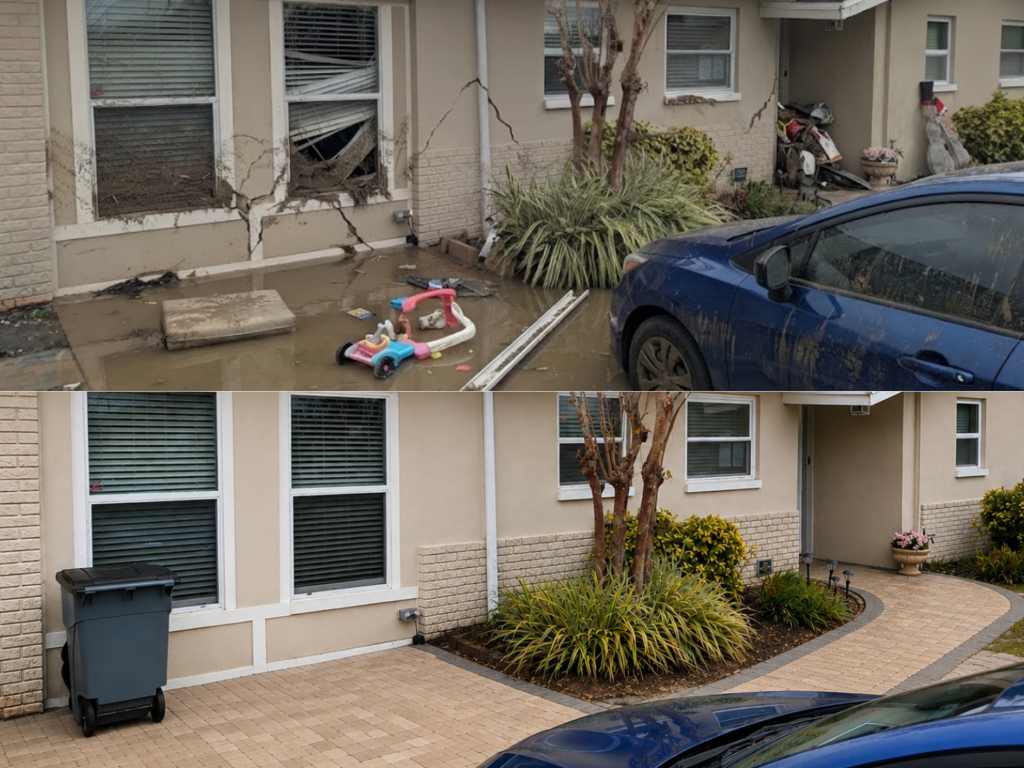
Not every wet material can be dried and kept. Making the right call here early prevents a mold problem later.
Remove immediately:
- Carpet and carpet pad — pad holds moisture at the subfloor level and almost never dries completely. Remove it the same day water is extracted.
- Insulation — saturated batt insulation cannot be dried effectively and must be removed.
- Drywall below the waterline — Category 3 flooded homes water soaks into drywall paper and framing. Drywall that contracts outside homes is typically removed to at least 12 inches above the high-water mark, sometimes higher depending on moisture meter readings.
- Particleboard cabinets and furniture — particleboard swells and delaminates when wet and does not dry to a structurally sound state.
May be salvageable with proper drying:
- Solid wood framing — can be dried if moisture readings return to baseline before mold establishes
- Concrete block walls — durable, but check for efflorescence and hidden moisture in the cores
- Tile flooring — the tile itself may be fine, but the adhesive and subfloor beneath need moisture testing
- Solid wood cabinetry — case by case; depends on species, construction, and saturation level
Flood-related mold remediation typically costs between $500 and $75,000 or more, and the driving factor is scope: how many rooms were affected, whether the HVAC system needs decontamination, and whether structural materials have to be removed and rebuilt rather than just dried and cleaned.
Making the right cut-and-keep decisions on day one avoids a mold remediation bill that dwarfs the cost of replacing materials.
For a detailed look at what post-storm structural repairs involve from a licensed GC’s perspective, the OCC hurricane recovery and repair guide covers the full scope from water extraction through rebuild.
Flood zones and what they mean for repairs in Clearwater
If your home is in a FEMA-designated Special Flood Hazard Area — Zone AE or Zone VE — standard repair rules do not fully apply to you.
If your home or business is determined to be substantially damaged by a flood or storm surge, you may be required to meet certain building requirements in your community to reduce future flood damage before you repair or rebuild.
Two rules that directly affect Clearwater flood zone homeowners:
The Substantial Damage rule. If the cost of restoring a flood-damaged home to its pre-damage condition equals or exceeds 50 percent of the home’s market value before the flooded homes,, the home is classified as substantially damaged. At that point, the entire structure must be brought into full current flood code compliance before repairs proceed. In coastal Pinellas, that typically means elevating the lowest floor to the Base Flood Elevation, which can require foundation work and structural modifications on top of the storm repair itself.
The 1-foot freeboard rule. Certain flood zones in Pinellas County require the finished floor to sit a minimum of 1 foot above the crown of the road — the highest point of the street directly in front of the property. This elevation must be verified by a survey issued by a licensed Florida surveyor before permitted work begins, not estimated.
Check your parcel’s flood zone at msc.fema.gov and confirm your substantial damage status with the Pinellas County Building Department before signing any repair contracts. An unlicensed contractor who does not know your flood zone status can put you into a compliance problem that costs more than the flood itself.
For out-of-state owners managing post-storm repairs in Pinellas County from a distance, coordinating flood zone compliance remotely is something OCC handles directly — including permit applications, flood zone documentation, and inspector coordination.
Ready to get the water out?
Call One Clearwater Construction at (727) 314-2191 or request a free estimate. We respond to flooded homes throughout Clearwater, St. Petersburg, Dunedin, Palm Harbor, Safety Harbor, Largo, Tarpon Springs, and Oldsmar.
Frequently Asked Questions
How quickly does mold grow after a home floods in Florida?
Mold spores begin colonizing wet drywall, wood framing, and insulation within 24 to 48 hours of water exposure, according to the EPA, CDC, and OSHA and in Pinellas County’s heat and humidity, that window often runs toward the shorter end. Extraction and drying must begin the same day water enters the flooded homes, not after the insurance adjuster visits.
Can I remove flood water from my home myself?
For shallow clean water in a single room caught within hours, a wet/dry vacuum and commercial dehumidifier rental are reasonable DIY tools but Category 3 water from storm surge, sewage backup, or outside flooding requires professional extraction, containment, and antimicrobial treatment that household equipment cannot deliver safely. If water contacted more than one room, reached wall height, or came from outside, professional mitigation protects both your health and your insurance claim.
Does homeowners insurance cover flooded homes water removal in Clearwater?
Standard homeowners insurance does not cover losses from external flooding, storm surge, or rising water — that requires a separate National Flood Insurance Program policy or private flood coverage. However, if the water source was internal, such as a burst pipe or appliance failure, your standard policy likely covers water removal and drying as part of the water damage claim, subject to your deductible.
How long does it take to dry out flooded homes in Pinellas County?
A single room with clean water caught within hours typically dries in 2 to 4 days with proper equipment. Multiple rooms or Category 3 water from storm surge takes 7 to 14 days of continuous mechanical drying. Saturated structural framing and subfloor can take 14 to 21 days or longer. Readings from a moisture meter, not visual inspection, confirm when drying is actually complete.
Do flood repairs require a permit in Clearwater?
Yes, any structural, electrical, plumbing, or HVAC repair in Clearwater or unincorporated Pinellas County requires a building permit, and flood zone properties may face additional substantial damage review before permits are issued. Unpermitted flood repairs create title problems at resale and can void your insurance coverage for future claims in the same area.